
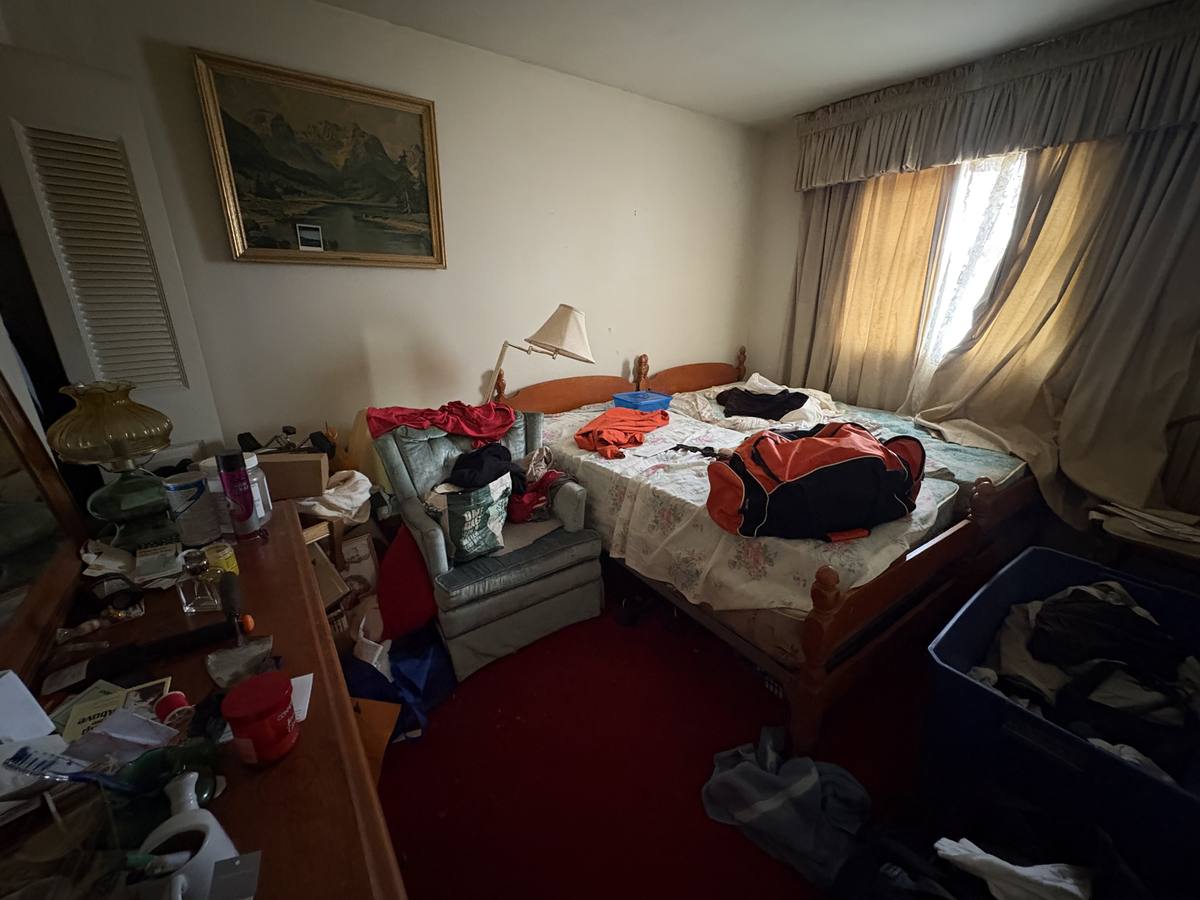
A bedroom in a Williamstown, Gloucester County estate house as the family left it, before Northbound Home Buyers bought it as-is.
📋 In This Article
The funeral is over, the letters from the Surrogate are in a folder on your kitchen table, and Mom's house in Gloucester County is exactly the way she left it. Forty years of furniture, a basement full of paint cans and holiday boxes, a furnace that has not been serviced since the last decade, and a roof everyone agrees "has a few years left." You live two hours away, or in another state, and every week the house sits there it costs the estate money.
This is the fourth guide in our series for South Jersey families settling an estate. The earlier ones cover who can sign, the inheritance tax waiver and siblings who disagree. This one is about the house itself: what to do with the contents, which repairs are worth paying for, and how to keep an empty house insured, heated and out of trouble with the town until it sells, whether you sell it fixed up or exactly as it stands.
What "As-Is" Means When the Seller Is an Estate
Selling as-is means the estate will not make repairs or give repair credits after the buyer's inspection. The buyer takes the house in the condition it is in on the day of closing. It does not mean the estate can hide what it knows.
An executor or administrator who never lived in the house is in an unusual position: they often genuinely do not know whether the basement takes on water or when the roof was last replaced. That is fine. The duty is to be honest about what you do know, not to investigate everything first. If you found a buckled ceiling stain, a leak bucket in the attic or an old oil fill pipe on the side of the house, say so. Our guide to what as-is buyers deduct and what you still have to disclose walks through the disclosure side in more detail.
One federal rule catches many estate houses because so much of South Jersey's housing was built before 1978. For a house built before 1978, EPA's lead disclosure rule (40 C.F.R. 745.107) requires the seller to give the buyer the federal lead hazard pamphlet, disclose any lead-based paint or lead hazards the seller knows about, and hand over any lead reports the seller has, all before the buyer is bound by the contract. The only sale the rule exempts is a foreclosure sale, so an estate sale is covered. The buyer also gets a 10-day window to test for lead unless they waive it in writing (40 C.F.R. 745.110). The rule does not make the seller test or remove anything.
Before Anyone Throws Anything Out
The urge to rent a dumpster and get it over with is strong. Resist it for a week or two. The contents belong to the estate, and some of them may belong to specific people under the will.
- Read the will for specific gifts. If Mom left the dining set to your cousin or the coin collection to a grandchild, those items are not yours to sell or discard.
- Photograph every room before anything moves. It takes an hour with a phone and settles a lot of later arguments about what was there.
- Pull the paperwork out first. Look for the deed, recent tax bills, the homeowner's insurance policy, mortgage or reverse mortgage statements, utility bills, any oil tank or septic records, old permits and warranties. Title, the insurer and the buyer will all ask for some of it.
- Look for anything of value in drawers, closets and the freezer before a crew arrives. Cash, jewelry and savings bonds turn up in estate clean-outs more often than people expect.
- Change the locks or at least account for every key. Neighbors, caregivers and relatives often have one.
New Jersey's fiduciary powers statute, N.J.S.A. 3B:14-23, gives a personal representative the authority to take possession of and manage estate real estate, pay its taxes and other charges, keep insurance in force, and make repairs to preserve the property or make it saleable, unless the will or a court order limits those powers. That is the legal footing for everything in this guide. Where the money comes from, and which receipts to keep, is the estate attorney's question. Our guide to selling a house in probate in New Jersey covers who holds that authority and when.
The Clean-Out: Four Ways to Handle It
| Approach | Works best when | Watch out for |
|---|---|---|
| Family does it | Heirs live nearby and the house is not overloaded | Weekends add up fast, and it is where many sibling disputes start |
| Estate sale company | The contents include furniture, tools or collectibles people will pay for | Unsold items usually still need hauling afterward; read the contract |
| Junk removal or dumpster | The contents have little resale value | Paint, chemicals, propane tanks and old electronics often cannot go in a regular load |
| Leave it for the buyer | You are selling as-is to a buyer who agrees in writing to take the contents | Remove everything the family wants first; after closing it is gone |
A full clean-out also changes what you are selling. Once the rooms are empty, stains, soft floors and water marks that were hidden behind furniture become visible to every buyer, which is one reason some executors choose to sell before clearing the house. When we bought an estate house in Williamstown that was full from front door to back bedroom, the family took the items that mattered to them and we handled the rest after closing.
Repairs: Which Ones Pay Back
An estate is not a renovation company. Spending estate money on a new kitchen means the executor is taking a market risk with the beneficiaries' inheritance, and if the house sells for less than hoped, someone will ask why. The repairs worth considering fall into three groups.
Repairs that protect the house
A roof leak, a broken window, a failed sump pump or a furnace that will not stay lit can turn into far more expensive damage while the house sits empty. These are the repairs the statute plainly contemplates, and they are usually money well spent whichever way you sell.
Repairs a financed buyer's lender will require
Buyers using FHA or VA loans, and some conventional buyers, can be held up when the appraiser flags safety or soundness problems: peeling paint on a pre-1978 house, a heating system that does not work, exposed wiring. If you plan to list on the open market, find out what a lender is likely to call out before you list, not after a contract is signed.
Items that come up in almost every New Jersey resale
- The smoke and carbon monoxide certificate most towns require before closing, plus a town resale inspection in some places. See our guide to New Jersey's smoke and CO certificate and resale inspections.
- An old heating-oil tank, which buyers' inspectors look for in older South Jersey neighborhoods. Our buried oil tank guide explains the options.
- Lead paint on a pre-1978 house, covered by the disclosure rule above.
Cosmetic work, such as paint, flooring and updated fixtures, is where executors most often lose money. It can help a listed house show better, but it rarely returns more than it costs once you count the extra months of carrying costs while the work is done.
Keeping an Empty House Safe Until It Sells
Most estate houses are vacant from the day of death until closing. That stretch is when the expensive surprises happen: a frozen pipe in January, a break-in, a code notice from the town. Three things deserve attention in the first month.
Insurance
A homeowner's policy is written for an occupied house. According to the Insurance Information Institute, most homeowner's policies include a vacancy clause that limits or excludes coverage once the home has been unoccupied for a set period, typically 30 to 60 consecutive days. On the widely used standard homeowner's form, for example, vandalism is not covered once the house has been vacant for more than 60 consecutive days before the loss. Call the carrier, tell them the owner has died and the house is empty, and ask in writing what the policy covers now. If the answer is "not much," ask about a vacancy endorsement or a separate vacant-dwelling policy, and keep liability coverage in place either way. Paying for this is one of the powers the statute gives the fiduciary.
Utilities and winter
- Keep the electric and heat on and the accounts paid. An unheated house in a South Jersey January can freeze, and buyers' inspectors need power and heat to test the systems.
- If you will not keep the heat on, have a plumber winterize it: water shut off at the main, lines drained, and antifreeze in the traps. Do it before the first hard freeze, and tell the insurer you did.
- Put the accounts in the estate's name so bills reach the executor, and forward the mail so tax and water bills are not missed.
- Arrange regular checks. A neighbor or a paid house checker should walk through on a schedule, look for leaks, run the taps and confirm the heat is working. Keep a simple log; insurers sometimes ask.
The town
New Jersey lets municipalities adopt ordinances requiring owners to register vacant and abandoned properties (N.J.S.A. 40:48-2.12s), and some South Jersey towns have. The details vary by town. In Dennis Township, Cape May County, for example, the ordinance applies to a house that cannot legally be reoccupied without repair or rehabilitation; a house with all building systems working that is actively marketed for sale is not treated as vacant property there. When the ordinance does apply, the owner registers within 120 days after the building becomes vacant or within 60 days after taking ownership, whichever is later, and the first-year fee is $500, rising each year it stays vacant.
Ask the municipal clerk where the house sits whether there is a vacant property ordinance, and keep up with the ordinary property maintenance rules in the meantime: grass cut, leaves and snow cleared from the sidewalk, and no broken windows left open to the weather.
Three Ways to Sell the Estate House
| Clean out, repair, list | List as-is | Sell as-is for cash | |
|---|---|---|---|
| Money the estate spends first | Clean-out plus repairs | Clean-out usually | None required |
| Months the house stays vacant | Longest | Medium | Shortest |
| Buyer pool | Widest, including financed buyers | Narrower; lenders may balk | Cash buyers only |
| Price | Highest gross, if the work pays back | Discounted for condition | Discounted for condition, fixed in writing |
| Agent commission | Yes | Yes | No |
There is no single right answer. A house in good shape in Cherry Hill or Mount Laurel with heirs who can wait will often net more listed. A full house in Vineland or Pennsville with an out-of-state executor and a winter coming often nets about the same or more sold as-is, once months of taxes, insurance, utilities and repairs are counted. Get a written cash number and an agent's honest opinion on the same week and compare them side by side; our cash offer vs. listing comparison lays out the cost lines to check.
Whichever route you choose, the closing still needs the same estate paperwork, starting with the state's inheritance tax lien release. See our New Jersey inheritance tax waiver guide for which form applies. If the heirs cannot agree on any of this, start with our guide to siblings who disagree about an inherited house.
The Bottom Line
Secure the house, photograph it and pull the paperwork before anything is thrown away. Call the insurer in the first weeks, keep the heat on or winterize, and ask the town about vacant property rules. Pay for repairs that protect the house; think hard before paying for ones that only make it prettier. Then compare a listing against a written as-is offer with the real carrying costs included.
We buy estate houses across Camden, Gloucester, Burlington, Cumberland, Salem and Atlantic counties exactly as they are, contents included if the family wants. Executors can see how it works on our page about how we help families sell an inherited or estate house in South Jersey, read how we buy South Jersey houses as-is, call Northbound Home Buyers at (856) 226-4289, or request a written cash offer for the estate. More answers are on our FAQ page.
This article is general information, not legal, tax or insurance advice. Every estate, will and policy is different, so talk to a New Jersey estate attorney and the property's insurance carrier about yours. The statutes, federal rules and ordinance cited above were checked in November 2026.