
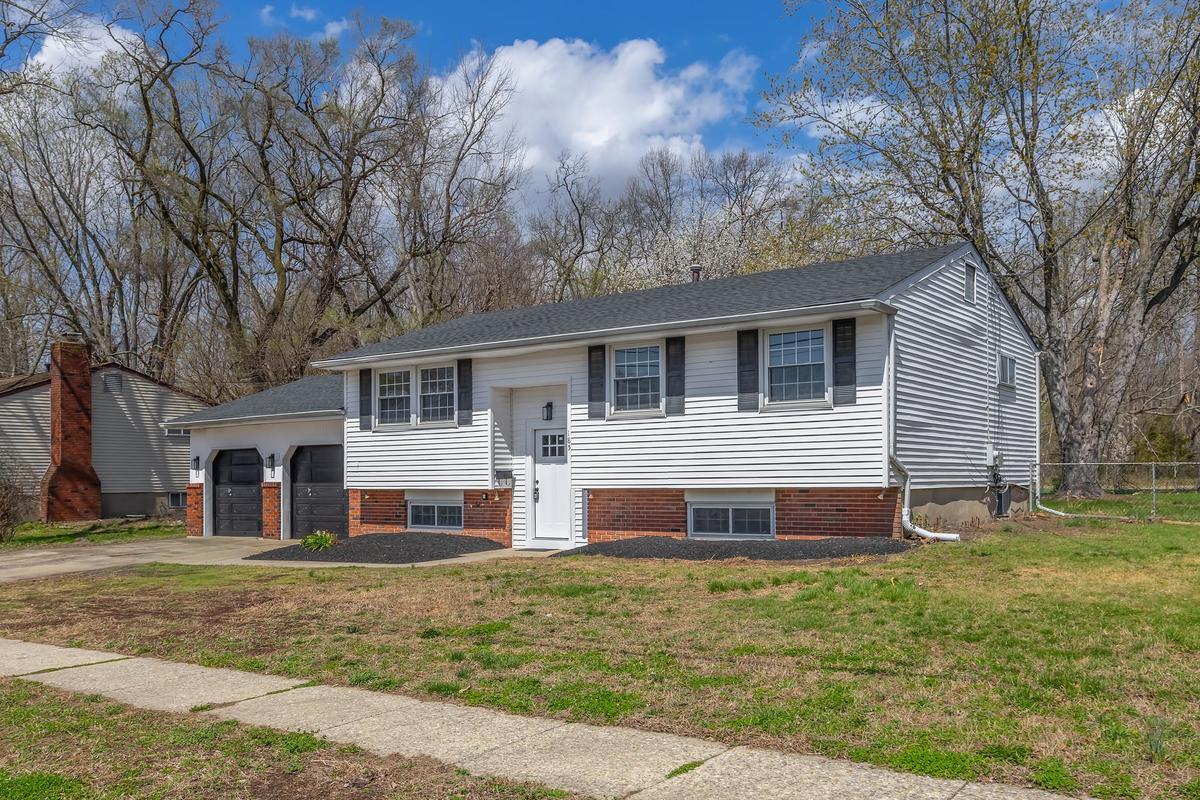
An estate purchase by Northbound Home Buyers in Williamstown, Gloucester County, NJ.
📋 In This Article
Most families settling an estate in South Jersey expect the county Surrogate to be the hard part. Then the executor gets the Letters, finds a buyer, and hears from the title company that the house still cannot close. The missing piece is a one-page document from Trenton: the New Jersey inheritance tax waiver.
New Jersey is one of a handful of states that still taxes what heirs receive, and the state protects that tax with a lien on everything the person owned when they died, including the house. Until the Division of Taxation releases its claim, no title company will insure a sale. This guide explains what the waiver is, how to tell whether your estate can use the quick affidavit or has to file a full return, what the tax costs when it applies, and how to plan a sale so the waiver does not become the thing holding everything up.
Why a Waiver Stands Between You and the Closing Table
Under N.J.S.A. 54:35-5, the transfer inheritance tax is a lien on all property the decedent owned at death, for up to 15 years, whether or not anyone has calculated a tax. The lien exists even when no tax will ever be owed. That is why the title company cares: a buyer cannot take clean title to a house with an open state lien on it.
The document that lifts the lien is Form 0-1, the tax waiver. A few facts about it surprise people:
- You cannot download it or fill it out yourself. Only the Division of Taxation's Inheritance and Estate Tax Branch issues a 0-1, and it issues a separate one for each asset.
- Real estate always needs a 0-1. The Division's executor guide says so in plain words. The do-it-yourself Form L-8, which works for bank and brokerage accounts left to close family, does not cover a house.
- One exception: a house owned by a married couple (or civil union partners) as tenants by the entirety passes to the surviving spouse with no waiver at all. The Division will not issue one because none is needed.
So for almost every inherited house we see in Camden, Gloucester and Burlington counties, the question is not whether the estate needs a waiver but which route gets it there.
Who Inherits Decides Which Path You Take
New Jersey sorts beneficiaries into classes by their relationship to the person who died. The class sets both the tax rate and the paperwork. These are the Division of Taxation's current rates:
| Class | Who | Tax on what they receive |
|---|---|---|
| A | Spouse, civil union or domestic partner, children (including adopted), grandchildren and great-grandchildren, parents, grandparents, stepchildren | No tax |
| C | Brothers and sisters, and the spouse or civil union partner of the decedent's child (a son- or daughter-in-law) | First $25,000 tax-free, then 11% on the next $1,075,000, 13% on the next $300,000, 14% on the next $300,000 and 16% above $1,700,000 |
| D | Everyone else: nieces, nephews, aunts, uncles, cousins, friends, unmarried partners who are not registered | 15% on the first $700,000, 16% above that |
| E | Qualified charities, religious and educational institutions, the State and its subdivisions | No tax |
Here is the point that trips up a lot of families: siblings inheriting from a parent are not Class C. If Mom leaves the house in Woodbury to her four children, every one of them is her child, so every one of them is Class A and no tax is due. Class C applies when the person who died was your brother or sister. The single aunt who leaves her Mount Laurel condo to her brother is a Class C transfer. When she leaves it to her nieces and nephews instead, that is Class D, which carries the highest rate.
Notice also that a step-grandchild is not Class A, and neither is a son-in-law. Read the will (or, without one, New Jersey's intestacy rules) against this table before you assume the estate is tax-free.
The Short Path: Form L-9
When everyone who inherits anything is Class A, the executor can ask for the real estate waiver with Form L-9, the Affidavit for Real Property Tax Waiver, instead of preparing a tax return. It is a sworn, notarized form signed by the executor, the administrator, or a surviving joint tenant on the property. It lists every beneficiary, their relationship, and their share, plus the county, municipality, block and lot of each New Jersey property.
The Division's instructions say the L-9 cannot be used if any of these is true:
- Any asset of the estate worth $500 or more goes to anyone outside Class A. One $1,000 bequest to a niece or a family friend is enough to move the whole estate onto the long path.
- Any New Jersey inheritance or estate tax is due.
- The relationship of a mutually acknowledged child is being claimed.
- The house was held as tenants by the entirety with a surviving spouse (no waiver is needed then anyway).
The Division also warns that when a trust exists, or the will creates one, it may require a full return if the trust's terms could produce a tax.
The L-9 has to be mailed with four attachments: the will with any codicils and trust agreements, a copy of the deed, the executor's or administrator's certificate (the Letters), and the death certificate. A form that is incomplete or missing an attachment is returned, which costs you weeks. It goes to the Division of Taxation, Transfer Inheritance Tax, PO Box 249, Trenton, not to the County Clerk. The L-9 is not itself a waiver. It is the request, and the 0-1 comes back from the Division.
The Long Path: A Full Inheritance Tax Return
If any beneficiary is Class C, D or E, the Division requires the Inheritance Tax Resident Return (Form IT-R), even when the math works out to no tax. That happens more than people expect: a charity named in the will, a brother who receives less than the $25,000 exemption, or a godchild left a car worth more than $500 all trigger a return.
What the Division's executor guide says about this route:
- Values are as of the date of death, not the date you file or the date the house sells.
- Any tax is due within eight months of the death. After that the Division charges interest at 10% a year on the unpaid tax.
- Processing takes at least several months once a return is filed, and longer if it is audited. The Division says roughly 40 to 50% of returns get additional review.
To see what that means in dollars, take a brother who inherits his late sister's house in Vineland, valued at $300,000 on the date of death, with nothing else passing to him. The first $25,000 is tax-free and the remaining $275,000 is taxed at 11%, so the tax is $30,250. If the same house went to a niece instead, all $300,000 would fall in the 15% bracket: $45,000. Those are illustrations using the published rates only. Debts the decedent owed, funeral costs and administration expenses can generally reduce the taxable amount, which is one reason an estate attorney or accountant usually prepares the return.
The tax is usually paid before the waiver, not out of the sale
Families often plan to pay the inheritance tax from the house proceeds. The trouble is that the Division generally will not release the house until the tax is settled, and the eight-month clock keeps running. Banks may release up to half of a decedent's account to the executor before a waiver, and they must honor a check written from the decedent's account to "New Jersey Inheritance and Estate Tax." Talk to the estate's attorney early about paying an estimated tax from those funds.
The Paperwork a South Jersey Title Company Will Ask For
Every title company sets its own requirements, but on an estate sale you should expect to gather most of the following before the closing can be scheduled:
- Certified death certificate.
- The will and any codicils, as probated by the county Surrogate.
- Letters Testamentary or Letters of Administration, usually delivered as short certificates from the Surrogate in the county where the decedent lived.
- The recorded deed showing how the decedent held title.
- The Form 0-1 waiver for the property, or proof that the house passed to a surviving spouse as tenants by the entirety.
- Mortgage and lien information, so payoffs can be ordered: any mortgage, home equity line or reverse mortgage that came due at death.
- The latest property tax bill and utility accounts, for prorations and final readings.
When there is no will, or the will names several co-executors, the title company may also want every heir or co-executor to sign. Our guide to selling an inherited house in New Jersey covers the Surrogate's side of this, with contact details for each South Jersey county's office.
Planning the Sale Around the Waiver
The waiver is rarely a problem for families who start on it early. It becomes one when the executor signs a contract first and learns about it from the title search. A sensible order of operations:
- Sort the beneficiaries into classes in the first week. That one exercise tells you whether this is an L-9 estate or a return estate, and roughly how long you are looking at.
- Get the Letters, then file the L-9 or the return. The L-9 requires the Letters as an attachment, so the Surrogate comes first.
- Tell the title company about the estate on day one and ask how its underwriter handles a closing before the 0-1 arrives. Some underwriters will consider holding part of the proceeds in escrow until the waiver is issued. Whether yours will is their decision, so ask rather than assume.
- Keep the house insured and the taxes paid while you wait. A vacant house with a lapsed policy is a much bigger problem than a slow waiver.
One more situation worth flagging: if your parent had moved to another state and died a resident there while still owning a South Jersey house, the estate may owe New Jersey's non-resident inheritance tax on the house, and the process is different. The Division publishes a separate FAQ for non-resident estates, and its Inheritance and Estate Tax Branch answers questions at (609) 292-5033.
How a Cash Sale Fits
We buy inherited houses across South Jersey, and we are used to working on the estate's schedule. We can put a written offer in the executor's hands early, so the family knows what the house is worth as it stands while the Letters and the waiver are still in progress. Our title company works with your estate attorney on the waiver and the payoffs, and the closing date is set for when the paperwork is ready, not the other way around. Because we buy as-is, nobody has to empty the house, make repairs, or keep it show-ready for months while Trenton processes a return.
Our Williamstown estate purchase in Gloucester County is a typical example of an estate we bought as-is with decades of belongings still inside. A cash offer is below full retail value, and our comparison page shows that trade-off plainly. Read more about how we handle estates on our page about how to sell an inherited house in New Jersey, see what a sale costs in our NJ seller closing costs guide, or compare the numbers on selling as-is in South Jersey.
The Bottom Line
An inherited New Jersey house cannot close until the state's inheritance tax lien is released, and the Form 0-1 waiver is what releases it. If every beneficiary is a spouse, child, grandchild, parent or stepchild, the L-9 affidavit is usually the short way there. If anyone else inherits even $500, the estate files a full return, any tax is due within eight months, and the waiver can take months. Figure out which path you are on early, and plan the sale around it.
If you want a number while the paperwork is in motion, call Northbound Home Buyers at (856) 226-4289 or request a cash offer on an inherited South Jersey house. There is no obligation. More answers are in our FAQ, and you can see the towns we buy in on our locations page.
This article is general information, not legal or tax advice. Tax rates and Division of Taxation procedures can change, and every estate is different, so confirm your situation with a New Jersey estate attorney or tax professional. Rates and form requirements above are from the New Jersey Division of Taxation as of October 2026.