
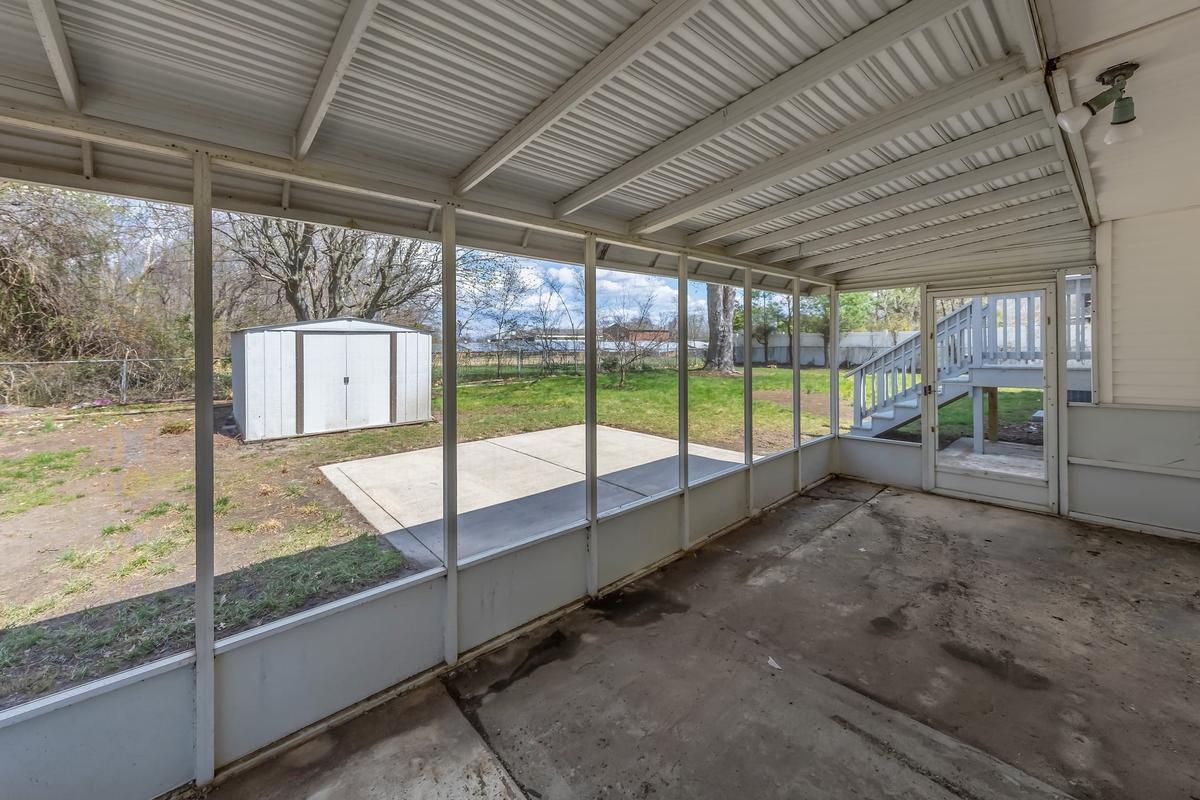
The back porch of an estate house Northbound Home Buyers bought in Williamstown, Gloucester County, NJ.
📋 In This Article
- First Question: Who Can Decide Right Now?
- While the Estate Is Open
- Once the Heirs Own It Together
- The Usual Disagreements, and What Settles Them
- Option 1: One Sibling Buys the Others Out
- Option 2: Sell Together, on Terms Written Down First
- When the Executor Is the One Stalling
- Option 3: Partition, the Last Resort
- The Bottom Line
Dad left the house in Cherry Hill to the three of you in equal shares. Your sister wants it sold before winter. Your brother says the family should keep it, but he does not have the money to buy anyone out. Your youngest sibling moved in to look after Dad two years ago and has not moved out. Every phone call ends the same way, and meanwhile the property tax bill keeps coming.
This is one of the most common situations we see in South Jersey estates, and it rarely gets solved by whoever argues hardest. It gets solved by knowing who has legal authority over the house today, what each sibling can and cannot force, and which exits are open. New Jersey changed one of those exits in 2025, so even families who looked into this a few years ago should read on.
First Question: Who Can Decide Right Now?
Two different sets of rules apply depending on where the house sits in the estate process, and most sibling fights start because people are using the wrong set.
- The estate is still open and an executor or administrator holds letters from the county Surrogate. That person generally controls the sale.
- The heirs already hold title themselves, because the house was deeded out of the estate, the estate was never opened, or it closed with the house still in the family. Now the siblings are co-owners, and no one of them controls it alone.
Pull the recorded deed and ask the estate attorney which one you are in before anyone makes demands. A house the parent held jointly with a surviving spouse, or one placed in a trust, follows different rules again.
While the Estate Is Open
New Jersey gives the personal representative a default power to sell estate real estate under N.J.S.A. 3B:14-23, unless the will or a court order limits it. That means a sibling who disagrees usually cannot veto a sale just by refusing to sign. We walk through where that authority comes from, and the will clauses that can change it, in our guide to selling a house in probate in New Jersey.
Two practical limits matter in a family dispute:
- The executor still owes every beneficiary a duty. Selling cheap to end an argument, or to a friend, invites a challenge. A written appraisal and a record of the offers received are the executor's best protection.
- Title companies sometimes want the heirs on board anyway. In some estates, especially where there is no will, an underwriter may ask the heirs to sign. Ask the title company at the start, not the week before closing.
Getting the state's inheritance tax lien released is a separate step that applies no matter who agrees. Which form you need depends on who inherits and from whom, so read our explainer on the New Jersey inheritance tax waiver before you plan a closing date.
Once the Heirs Own It Together
When siblings take title together, New Jersey treats them as tenants in common unless the deed or will expressly says joint tenancy (N.J.S.A. 46:3-17). In plain terms, each sibling owns an undivided share of the whole house. Nobody owns "the upstairs." That has three consequences:
- No single sibling can sell the whole house. A buyer needs a deed signed by every owner.
- Each sibling can generally deal with their own share, but very few buyers want a fraction of a house with relatives attached.
- Every owner has the right to use the property. A sibling living there is not trespassing, though that does not settle who should pay what.
The Usual Disagreements, and What Settles Them
| The disagreement | What usually moves it |
|---|---|
| "It's worth more than that" | One independent appraisal everyone receives at the same time, plus a written cash offer for comparison. Arguing over online estimates goes nowhere. |
| "We should keep it in the family" | Ask who is keeping it and how they will pay the others. A plan to keep the house needs a buyer with funding, even if that buyer is a sibling. |
| A sibling lives in the house | Agree on a move-out date tied to closing, and on who covers taxes and insurance until then. Put it in writing. |
| "I paid the taxes for two years" | A simple ledger of who paid taxes, insurance, utilities and repairs, with receipts. Credits can come off the top of the sale or buyout. |
| One sibling stops answering | Written notice of the plan with a reply date, sent to every heir. Silence is easier to deal with when it is documented. |
A neutral mediator, or each side's attorney, can turn these points into a short written agreement. That agreement is worth more than any single concession, because it is what a title company and a buyer will rely on later.
Option 1: One Sibling Buys the Others Out
A buyout keeps the house in the family and is often the quickest route. The arithmetic most families use is simple: take the agreed value of the whole house, subtract any mortgage or lien that must be paid, and multiply by each seller's share. Credits for unequal spending, from the ledger above, get settled at the same time.
Three things trip buyouts up:
- Financing. The buying sibling usually needs a mortgage, and a lender will want its own appraisal. Find out what they can borrow before the family agrees to a number.
- An executor who is also the buyer. Under N.J.S.A. 3B:14-36, a sale of estate property to the fiduciary, or to their spouse, agent or attorney, can be set aside by an interested person who did not consent after fair disclosure, unless the will authorized it or a court approved it after notice. If the executor wants the house, get every beneficiary's informed written consent or court approval first.
- The paperwork. The others deed their shares to the buyer, or the estate deeds the house straight to them. Either way it is a real closing with title insurance, and the usual New Jersey seller closing costs may still apply.
Option 2: Sell Together, on Terms Written Down First
If nobody wants to keep the house, the fight is usually about price and speed. Settle those before the first showing, not after an offer arrives:
- The lowest price everyone will accept, and how long you will wait for it.
- Who signs, and who talks to buyers and the title company.
- Who pays carrying costs until closing, and how those get repaid.
- How the net proceeds will be divided, including the credits.
Listing with an agent usually brings a higher price for a house in good shape, but it means cleaning out, repairs and months of shared decisions. A cash sale trades some price for a fixed number, no repairs and a closing date the family picks, which is why out-of-state heirs often prefer it. A brother and sister living in two other states sold their father's colonial that way, as described in our Woodbury inherited-house project. For a broader look at the trade-offs, see our main guide to selling an inherited house in New Jersey and our cash offer vs. listing comparison.
If the estate is still open, remember the money does not go straight out at closing. Creditors and taxes come first, and the estate attorney will tell you how much to hold back before distributions.
When the Executor Is the One Stalling
Sometimes the sibling blocking everything is the one with the letters. They will not list the house, will not answer, or are living in it rent-free while the estate pays the bills. Beneficiaries are not stuck.
A beneficiary can ask the Superior Court, Chancery Division, Probate Part to order the executor to act or to account. N.J.S.A. 3B:14-21 lets the court remove a fiduciary who ignores a court order to file an inventory or account, wastes or misapplies estate property, or, as one of two or more co-executors, refuses to join the others and so holds up the estate. These are court cases with real costs, so they are a lever, not a first move. A letter from an attorney that names the statute often gets things moving on its own.
Option 3: Partition, the Last Resort
When siblings own the house together and cannot agree, any one of them can file a partition action in the Superior Court. Under the general statute, N.J.S.A. 2A:56-2, the court may order the property sold if it cannot be divided without great prejudice to the owners. A single-family house almost never can be split, so historically these cases often ended in a court-ordered sale.
New Jersey added a layer in 2025. The Uniform Partition of Heirs Property Act, P.L. 2025, c. 88 (N.J.S.A. 2A:56-45 to -56), applies to partition cases filed on or after its effective date in August 2025 when the house is "heirs property": owned as tenants in common, with no written agreement among all the owners about partition, and with relatives holding enough of it (for example, at least 20 percent of the interests). Most houses inherited by siblings meet that test. When it applies:
- A court-appointed special master oversees the case, and a disinterested New Jersey licensed appraiser values the whole house unless the owners agree on a value. Parties have 30 days after the appraisal is filed to object.
- The siblings who want to keep it get first chance to buy. If anyone asks for a sale, the others have 45 days after notice to elect to buy out the sellers' shares at the appraised value times their fraction, then 60 days to pay.
- The court leans toward dividing land, not selling it, unless that would cause great prejudice to the owners as a group. The factors include whether the property can practically be divided, family history with the property, sentimental attachment, current use, and who has paid the taxes, insurance and upkeep.
- If there is a sale, it is normally an open-market listing by a court-appointed broker, first offered at no less than the appraised value, not a courthouse auction, unless the court finds sealed bids or an auction would bring more.
The new law protects the family members who want to keep the house, but it does not make partition quick or cheap. You pay lawyers, an appraiser and a broker, and the house sits in limbo while the case runs. That is why almost every family is better off using the threat of partition to reach an agreement than actually filing.
The Bottom Line
Start by finding out who has authority: the executor while the estate is open, or all the siblings together once they hold title. Then get one shared valuation, keep a ledger of who paid what, and put any deal in writing. A buyout keeps the house in the family, a joint sale ends the shared bills, and partition is there when nothing else works.
We buy inherited houses across Camden, Gloucester, Burlington, Cumberland and Atlantic counties, as-is, and we put a single written offer in front of every heir at once so nobody hears a different number. We can only buy when everyone who needs to sign is on board, and we will tell you that up front. To see how the process runs for families, read how we help heirs sell an inherited house in South Jersey, or call Northbound Home Buyers at (856) 226-4289 and request a written cash offer the whole family can review. More answers are on our FAQ page.
This article is general information, not legal or tax advice. Estates and family situations differ, and statutes and court rules can change, so talk to a New Jersey estate or real estate attorney about yours. The statutes cited above were checked in November 2026.