
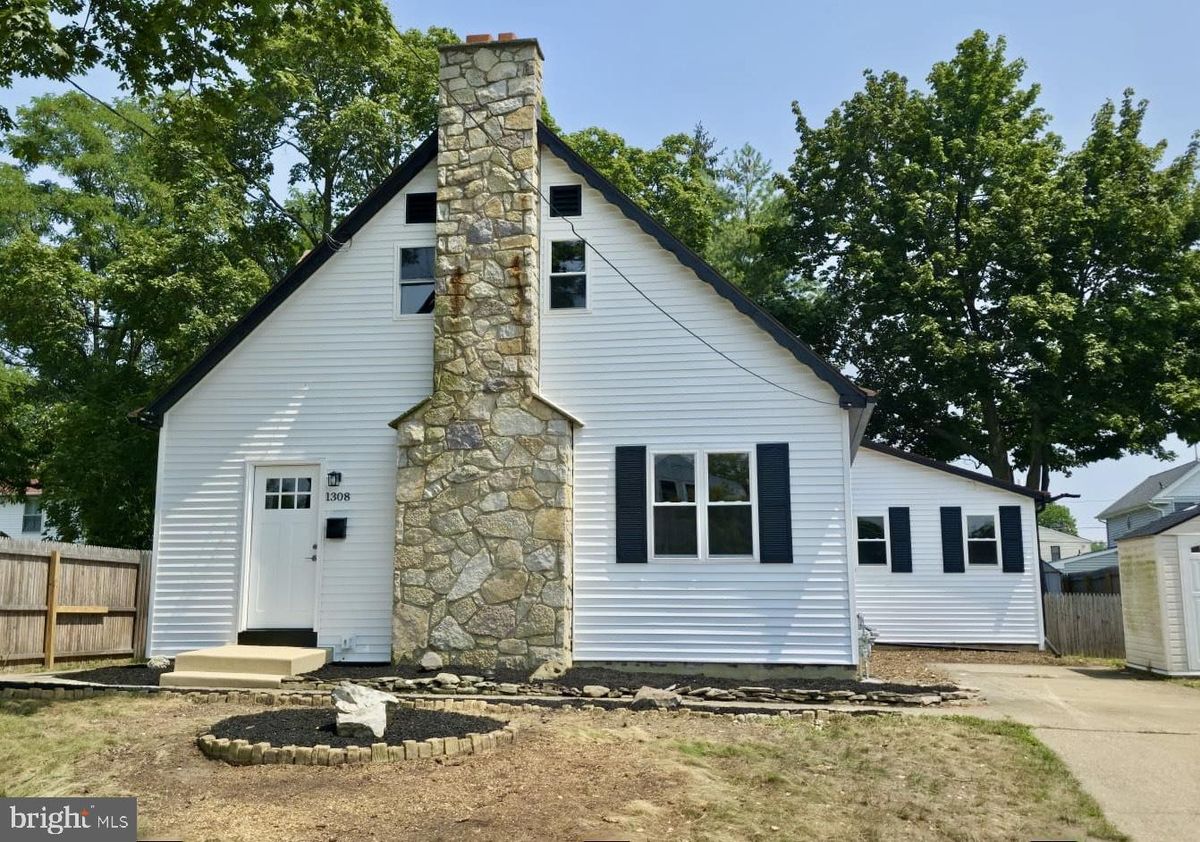
A completed Northbound Home Buyers purchase in Glendora, Camden County, NJ.
📋 In This Article
Most South Jersey sellers find out about the smoke alarm certificate the same way: a week before closing, when the title company or the buyer's attorney asks for it and nobody has ordered it. Then they find out the fee goes up the closer you get to the closing date, that the fire inspector will not install anything for you, and — depending on the town — that there is a second inspection nobody mentioned either.
None of this is complicated once you know it exists. New Jersey has one statewide requirement that applies to almost every house sale, and a patchwork of municipal resale inspections layered on top of it. This guide covers both: what the state certificate actually checks after the 2025 changes, what Cherry Hill, Vineland and Gloucester Township each require on top, and what changes when you sell a house as-is.
The Statewide Rule: No Certificate, No Sale
New Jersey law (N.J.S.A. 52:27D-198.1 and 198.2) says that when a house used by no more than two households changes occupancy, the owner may not sell it, lease it or let anyone move in without first getting a certificate from the local fire enforcing agency showing the house meets the alarm requirements. In everyday terms: one- and two-family homes need the certificate before closing. It is the seller's job to get it, and a seller who closes without one faces a fine of up to $500 under N.J.S.A. 52:27D-198.3.
You will hear it called different things — the smoke cert, the CSACM, the smoke detector certification. Since 2025 its formal name on the state's application portal is the Certificate of Smoke Alarm, Carbon Monoxide Alarm and Secondary Power Source Identification Label Compliance. The long name tells you exactly what the inspector is there to look at.
Who issues it in your town
It is issued by whoever enforces the fire code where the house is. In many towns that is the local fire department or fire district's fire prevention bureau — Cherry Hill and Vineland both handle it through their fire departments. Where the state Division of Fire Safety is the enforcing agency, you apply through the Department of Community Affairs' online portal instead. If you are not sure which applies to you, call your municipal clerk and ask who handles resale smoke certifications — it is a question they get every day.
What Changed in 2025
On February 3, 2025, P.L. 2025, c.19 was signed and took effect immediately. It made two changes that matter to anyone selling now, and a lot of checklists floating around online still have not caught up with either.
The fire extinguisher requirement is gone. For years, a New Jersey seller had to have a mounted ABC extinguisher within ten feet of the kitchen to pass. The 2025 law removed that from the statute. Fire officials' current checklists now say so outright: portable fire extinguishers are no longer required for the resale certificate. If an older guide tells you to buy one before your inspection, it is out of date.
A new label is required if the house has a second power source. If the home has solar panels, a permanently installed generator, a battery storage system or any other supplemental source of electricity, it now needs a warning label within 18 inches of both the main electrical panel and the electric meter. Fire officials want wording such as “CAUTION: MULTIPLE SOURCES OF POWER” on a printed, weather-resistant label — not a handwritten note. The reason is simple: a firefighter who shuts off the main breaker needs to know the house can still be live. With rooftop solar now common from Mount Laurel to Egg Harbor Township, this is the item most likely to fail a South Jersey house that would otherwise pass.
What the Inspector Actually Checks
The exact rules depend on when the house was built and whether it was later renovated, because older homes are allowed to keep the type of alarm system that was required when they were built. But the fire officials' checklists across the state cover the same core items:
- Smoke alarms on every level of the house, including the basement, and outside each separate sleeping area in the immediate vicinity of the bedrooms. Newer homes also need them inside each bedroom, hardwired and interconnected.
- No alarm older than ten years. The manufacture date is printed on the back. An alarm that works perfectly will still fail if it is past its date.
- Battery-only smoke alarms must be the ten-year sealed type. A standard alarm with a replaceable 9-volt battery will not pass where a battery unit is allowed.
- Hardwired alarms stay hardwired. If the house was built with hardwired alarms, you cannot swap them for battery units.
- Carbon monoxide alarms in the immediate vicinity of the sleeping areas. These can be battery, plug-in or hardwired, and combination smoke/CO units are allowed.
- The secondary power source label, if the house has solar, a generator or battery storage.
The inspector will not fix anything for you
Fire inspectors cannot install, adjust or supply alarms, and most cannot give you an exact appointment time. Someone has to let them in. If an alarm fails, you replace it and pay for a re-inspection. The cheapest way through is to walk the house yourself the week before — check every date stamp, press every test button, and confirm the label is up if you have solar — before you apply.
Why You Should Apply Early: The Fee Ladder
Where the state Division of Fire Safety is the enforcing agency, the fee depends on how close to closing you apply:
| When you apply | State fee |
|---|---|
| More than 10 business days before closing | $45 |
| 4 to 10 business days before closing | $90 |
| Less than 4 business days before closing | $161 |
Towns that run their own fire prevention bureau set their own fees under the same law, and many also charge more the closer you get to closing — Vineland's, below, is one example. Either way the lesson is the same: apply as soon as you have a firm closing date. The certificate is tied to the sale, and a failed inspection a few days before settlement is how closings get pushed.
Your Town May Add a Second Inspection
The smoke certificate is the state's requirement. Many New Jersey municipalities add their own resale inspection on top, usually called a resale certificate of occupancy, a certificate of continued occupancy (CCO) or a certificate of inspection. There is no single state rule for these — each town decides whether it has one, what it covers and what it costs. Three towns in our market show how wide the range is.
Cherry Hill: an exterior inspection before every sale
Cherry Hill's code (§ 15-77) requires an exterior property area inspection on the sale or resale of every property in the township, checked against its property maintenance standards. The fee is $100. The first re-inspection is free, the second is $25 and each one after that is $30. Any repairs the property maintenance inspector calls for must be done within 30 days of notice. Selling without the residential certificate of occupancy carries a fine of $100 to $500 per day. The township lists the kinds of things it looks at: sidewalks, driveways, fences, trees, grading and drainage, overgrowth, exhaust vents, sump pump discharge, sheds and other accessory structures, and ground-surface hazards. That is in addition to the Cherry Hill Fire Department's smoke and CO inspection — two separate appointments, two separate sign-offs. If you are selling in Cherry Hill, our Cherry Hill page covers how we handle both.
Vineland: a certificate of inspection, even when selling as-is
Vineland requires anyone selling a single-family home, a duplex or a multi-family building to get a Certificate of Inspection before settlement, handled through the Vineland Fire Department. The city is explicit that the inspection is still required when the house is sold as-is, as a short sale, or vacant. Applications are filed in person, need a minimum of four business days, and cost $125 per unit if filed more than ten days before closing or $200 per unit between four and ten days. Re-inspections are $50. If you own a duplex or a small multi-family, the city also advises checking with the zoning office before you list, to confirm the use is conforming.
The part that matters for a house that needs work: where the home is uninhabitable or needs repair, Vineland lets the buyer sign a Certificate of Transfer (CTT) affidavit taking responsibility for fixing what the inspection found ($25, or $50 inside ten days). That is the mechanism that lets an as-is sale close without the seller doing the repairs. See our Vineland page and our Cumberland County selling guide for more on that market.
Gloucester Township: the smoke certificate only
At the other end of the range, Gloucester Township in Camden County says plainly that a certificate of occupancy from its construction office is not required for home resales — sellers only need the smoke detector certification from their local fire department. That covers neighbourhoods like Glendora, where we bought the house in our Glendora project for an older couple who were ready to move on.
How to find out what your town requires
Call the municipal clerk or the construction/code office and ask two questions: “Does the township require a resale certificate of occupancy or continued occupancy inspection for a single-family sale?” and “Who issues the smoke and carbon monoxide certificate?” Get the fee and the lead time for each. Ask before you sign a contract, not after — the answers decide how much time you need between contract and closing.
What Changes When You Sell As-Is
Here is where sellers get tripped up. “As-is” describes the deal between you and your buyer — it means you are not making repairs for them. It does not switch off the town's rules. Vineland says so in writing, and the state's smoke certificate law applies to the owner regardless of what the contract says.
What the law does provide is a route for houses that genuinely need rebuilding. Under the 2025 amendments, a sale of a house that needs rehabilitation to the point that a new certificate of occupancy will be required is exempt from the smoke certificate — on the condition that nobody lives in it until the new certificate of occupancy is issued under the Uniform Construction Code. In sheriff's sales and foreclosures of houses in that condition, the law puts the responsibility on the purchaser. The state's application portal handles this as a separate certificate of exemption.
In practice, this is how most as-is sales of rough houses close in New Jersey. The seller still has to deal with the paperwork, but the burden of meeting the code shifts to the buyer who is going to renovate — either through the rehabilitation exemption or, in towns like Vineland, a buyer's transfer affidavit. A regular retail buyer financing with a mortgage usually cannot take that on, because their lender wants a house that can be lived in on day one. Our guide to selling as-is in South Jersey explains what else a buyer deducts for a house in that condition.
Who Handles What at Closing
| Item | Traditional listed sale | Sale to Northbound |
|---|---|---|
| Smoke/CO certificate application | Seller orders and pays | We tell you up front what your town requires and when |
| Replacing failed alarms and the solar label | Seller, before re-inspection | Discussed up front — you are not asked to renovate |
| Town resale inspection repairs | Seller, often inside a 30-day repair window | Not required of you — we buy as-is and take on the house's condition |
| Re-inspection delays | Seller, and they can push the closing | Planned into a closing date you choose |
Exactly which document is filed by whom varies by town, and we will not pretend it is identical everywhere. What does not vary is the principle: when you sell to us, the repairs the house needs are our problem, not a line item on your closing list.
Estates, Rentals and Delaware
Inherited houses. The executor or administrator is the seller, so the certificate is theirs to get. An estate house that has sat empty often has alarms well past their ten-year date and utilities that were shut off — plan for that. Our inherited house guide covers the probate side.
Rentals. The same statute applies to any change of occupancy, not only a sale, so landlords already know the drill from tenant turnover. Selling with a tenant in place has its own wrinkles; our landlord's guide walks through them.
Delaware is different. Everything above is New Jersey law. If your property is in New Castle, Kent or Sussex County, these statutes do not apply to it. Our guide to Delaware seller closing costs covers what matters on that side of the river.
The Bottom Line
For a typical South Jersey sale, the checklist is short. Find out who issues your smoke certificate and whether your town adds its own resale inspection. Walk the house and replace any alarm past its date. Put the label up if you have solar or a generator. Then apply the day you have a closing date. Do those four things and the certificate is a formality. Leave them until the last week and they are the reason your closing moves.
If the house needs more than new alarms — if the town's inspection is going to turn up a list you do not have the time or money to work through — that is exactly the situation a cash sale is built for. Our offer is below full retail value, and in exchange there are no repairs, no showings, no commission and no closing costs on your side. Our comparison page lays out the trade-off honestly, NJ seller closing costs shows what comes out of a conventional sale, and how it works covers our timeline. More answers are in our FAQ.
This article is general information, not legal advice. Fees and requirements change and differ by municipality, so confirm yours with your local fire official and code office. If you want a straight answer on what your South Jersey house would sell for as it stands, call Northbound Home Buyers at (856) 226-4289. We buy across South Jersey and into all three Delaware counties — see our locations page.