
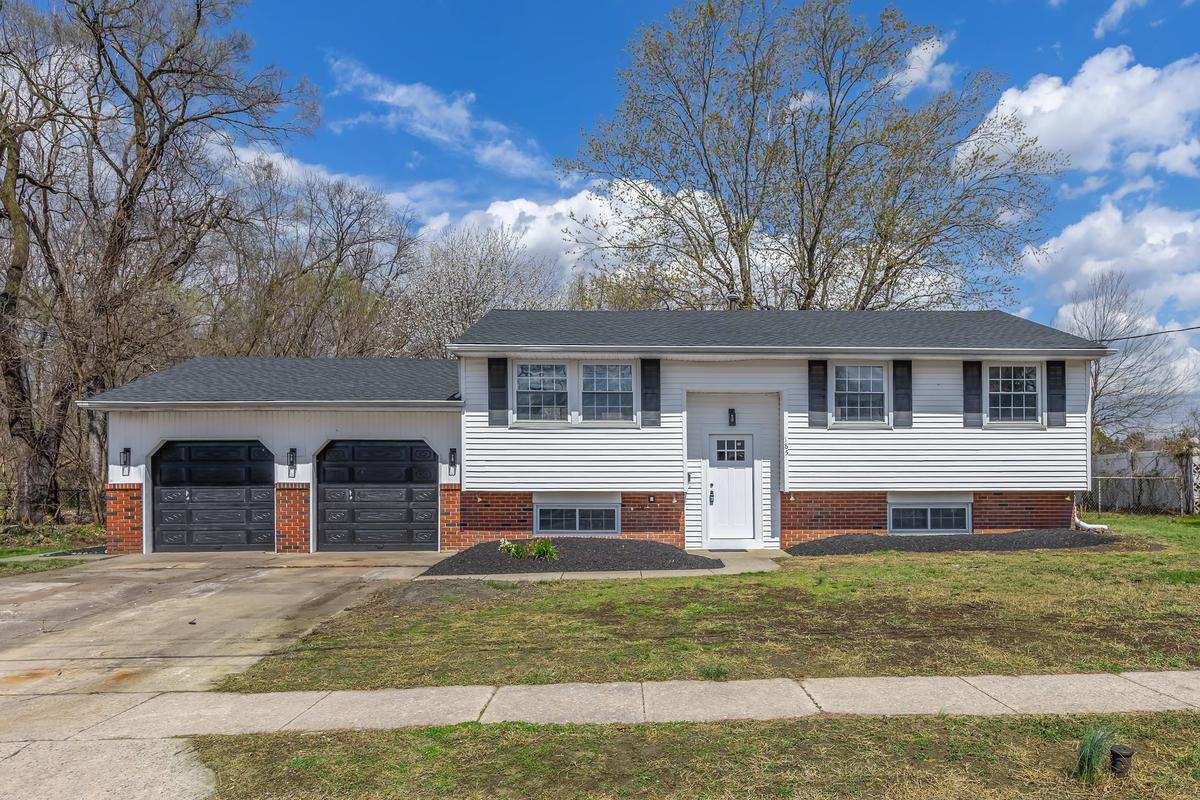
A completed Northbound Home Buyers purchase in Gloucester County, NJ.
📋 In This Article
- What Delaware actually charges a seller
- The 4% realty transfer tax, in real dollars
- Who pays which half — and the first-time buyer trap
- Delaware vs. New Jersey: same house, very different bill
- If you've moved away: the nonresident withholding
- Delaware makes you close with an attorney
- What you must disclose — even selling as-is
- Property taxes and the reassessment
- If you're behind: how Delaware foreclosure moves
- County by county: New Castle, Kent and Sussex
- What changes when you sell to a cash buyer
We buy houses on both sides of the Delaware Memorial Bridge, and there is one conversation we have over and over with sellers who have lived in South Jersey their whole lives and now own a house in Wilmington or Dover. They assume the two states work roughly the same way. They do not. On a $300,000 sale, the state-imposed cost of transferring the deed in Delaware is several times what New Jersey charges — and almost nobody sees it coming.
This guide covers what Delaware actually takes out of a home sale: the realty transfer tax with real dollar amounts, the income tax withholding that applies if you've moved out of state, and two procedural rules — mandatory attorney settlement and the written disclosure duty — that surprise sellers regularly. Everything here is drawn from the Delaware Code and the counties' own published procedures.
What Delaware Actually Charges a Seller
Set aside agent commissions and repair credits for a moment — those vary and are negotiable. The state- and county-imposed costs are short and specific:
- The realty transfer tax — 4% of the sale price in most of Delaware, collected by the county Recorder of Deeds when the deed is recorded, and customarily split between buyer and seller.
- Nonresident income tax withholding — an estimated income tax payment made at settlement, and only if you are no longer a Delaware resident when you sell.
- The attorney settlement fee — not a tax, but not optional either, because Delaware requires a licensed attorney to handle the closing.
Everything else on a Delaware closing statement — commissions, credits, payoffs, prorated taxes — comes from the deal you strike. That's the negotiable side, and it's where sellers lose the most money. We break the commission math down in our guide to cash buyer vs. realtor.
The 4% Realty Transfer Tax, in Real Dollars
Delaware's transfer tax has two layers stacked on top of each other. Title 30, Section 5402 of the Delaware Code sets the state tax at 3% of the value of the property — but reduces the state's share to 2.5% wherever the county or municipality has enacted the full 1.5% local transfer tax. Because the counties and most municipalities have done exactly that, the practical answer across Delaware is 4% total: 2.5% to Dover, 1.5% to the county or town.
Four percent of a sale price is a large number, and it's worth seeing it written out rather than as a percentage:
| Sale Price | Total Transfer Tax (4%) | Seller's Customary Half (2%) |
|---|---|---|
| $200,000 | $8,000 | $4,000 |
| $250,000 | $10,000 | $5,000 |
| $300,000 | $12,000 | $6,000 |
| $350,000 | $14,000 | $7,000 |
| $400,000 | $16,000 | $8,000 |
| $500,000 | $20,000 | $10,000 |
Unlike New Jersey's graduated schedule, there is no rate cliff and no bracket to plan around. It's a flat percentage of price, which makes it easy to estimate and impossible to engineer around. The Recorders of Deeds in New Castle, Kent and Sussex counties are the collecting agents — the tax is paid at recording, so it comes off the settlement sheet on closing day.
Who Pays Which Half — and the First-Time Buyer Trap
Here is the part sellers most often get wrong. Delaware law imposes the tax on the transaction; it does not dictate who writes the check. The 50/50 split is custom, not statute. It's the default in most Delaware purchase contracts, which is why "the seller pays 2%" is the working answer — but it is a contract term, and in a soft market or a motivated sale it moves.
That flexibility cuts both ways. If you are competing for a buyer, agreeing to absorb more than half is a real concession worth thousands. If you are the one being asked, price it as the cash it is rather than as a percentage.
The first-time buyer discount does not help you
Delaware gives first-time home buyers a reduction of one-half percent, applied to the lesser of the property's value or $400,000. Section 5402(c) is explicit that the reduction applies to the grantee's portion — the buyer's — and does not relieve the grantor of the seller's portion. If a buyer's agent tells you the sale qualifies for the exemption, that's true, and it's their savings, not yours. Your 2% is unchanged.
Delaware vs. New Jersey: Same House, Very Different Bill
Because we buy on both sides of the line, this comparison comes up constantly — usually from someone who sold a house in Cherry Hill five years ago and assumes the Wilmington sale will feel similar. Take a $300,000 sale in each state:
| Seller-Side Cost | New Jersey | Delaware |
|---|---|---|
| Transfer tax / fee on a $300,000 sale | About $1,715 (graduated schedule) | About $6,000 (2% customary half of 4%) |
| Rate structure | Graduated, with a rate jump above $350,000 | Flat percentage of price |
| Who pays | Seller, by statute, in a standard sale | Split by contract; 50/50 is customary |
| Nonresident withholding | Greater of 10.75% of gain or 2% of price | 6.6% applied to estimated gain |
| Who can conduct settlement | Attorney or title agent | Delaware-licensed attorney, required |
| Senior / disabled discount | Yes, a partial exemption on the transfer fee | No equivalent seller-side reduction |
Roughly three and a half times the transfer cost, on the same price, twenty minutes apart. That is not a reason to avoid selling in Delaware — it's a reason to build it into your number before you sign anything. Our companion guide on NJ seller closing costs covers the New Jersey column in the same detail, including the $350,000 rate cliff and the senior exemption.
If You've Moved Away: The Nonresident Withholding
New Jersey sellers know this concept as the "exit tax." Delaware has its own version, and the mechanics are meaningfully better for most people.
Under Title 30, Section 1126 of the Delaware Code, a nonresident individual who sells Delaware real estate files a declaration of estimated income tax at settlement. The calculation applies Delaware's highest marginal personal income tax rate — 6.6% — to an estimate of the gain recognized on the sale. There's also an alternative computation the Director of Revenue provides, applying that same rate to the difference between the total amount realized and the net balance due at settlement on all recorded liens against the property.
Two things matter here:
- It is a prepayment, not an extra tax. It's an advance against Delaware income tax you may or may not owe, reconciled when you file a Delaware nonresident return. Overpayment comes back.
- It is calculated on gain, not on price. This is the crucial difference from New Jersey, where the withholding is the greater of 10.75% of the gain or a hard 2% of the gross sale price — a floor that hammers low-gain sales.
The practical effect shows up most clearly for heirs. An out-of-state heir selling an inherited house generally gets a stepped-up basis at the date of death, so the taxable gain can be very small. In New Jersey the 2% floor means a $400,000 sale still has $8,000 withheld even when the true liability is a fraction of that. In Delaware, a small gain produces a small withholding. If you're working through an estate, our guide to selling an inherited house covers the probate side of the process.
Plan the withholding as a cash-flow event, not a loss. If every dollar of proceeds is spoken for on the day you close, an unexpected line on the settlement sheet can break the budget even when the money eventually comes back.
One caveat worth stating plainly: this is general information, not tax advice, and the estimate at settlement is not your final liability. Have your accountant run your actual numbers before you rely on any figure — including ours.
Delaware Makes You Close With an Attorney
In New Jersey, a title agent can run your closing. In Delaware, they cannot. Delaware requires that real estate settlements be conducted under the supervision of a Delaware-licensed attorney — a rule confirmed by the Delaware Supreme Court in 2006 in the Mid-Atlantic Settlement Services matter, which held that handling these settlements without a Delaware attorney's supervision is the unauthorized practice of law.
For sellers this means three things. There will be an attorney and settlement fee on your closing statement. Your settlement will be scheduled around that attorney's calendar. And — the upside — you will have a lawyer reviewing the deed, the payoff figures and the transfer tax computation before anyone signs, which is genuine protection if your title has a wrinkle in it.
If you own a property in Newark or Middletown and you're used to how a South Jersey closing runs, build an extra week into your expectations for scheduling. It's rarely a problem; it's just different.
What You Must Disclose — Even Selling As-Is
Delaware's Buyer Property Protection Act is stricter than most sellers expect. Under Title 6, Section 2572, a seller transferring residential real property shall disclose, in writing, all material defects of that property that are known when the property is offered for sale or that become known before final settlement. The disclosure is made before you sign the listing agreement, and it must be updated for any material change that occurs before you close.
The point people miss: an "as-is" clause and the disclosure duty are two different things. As-is governs who fixes what — it tells the buyer you won't be making repairs or giving credits. It does not govern what you have to tell them. Selling as-is with a known defect you never wrote down is not an as-is sale; it's a disclosure problem. Our guide on selling a house as-is covers how that conversation should actually go.
Delaware does carve out exemptions in Section 2577. The disclosure requirement does not apply to a number of transfers, including:
- Transfers by a fiduciary in the course of administering a decedent's estate, guardianship or trust.
- Sheriff's sales and other transfers resulting from a default.
- A transfer to a mortgagee by deed in lieu of foreclosure.
- Transfers between co-owners, to a spouse or a direct relative, or under a divorce property settlement.
- Transfers to or from a government entity.
Those exemptions are narrower than they look — an executor who has taken title personally is in a different position from one selling as fiduciary, for instance. Ask your settlement attorney which side of the line your sale falls on rather than assuming.
Property Taxes and the Reassessment
Delaware's property taxes are famously low compared with New Jersey's, and that has not changed. What has changed is the assessment underneath them. All three Delaware counties recently completed full property reassessments — the first in decades. Before this round, New Castle County's values dated to 1983, Kent County's to 1987, and Sussex County's all the way back to 1974. Legislation signed in 2023 now requires the counties to reassess at least every five years, so the long drift is over.
For a seller, the reassessment matters in two ordinary ways. Your property tax is prorated at settlement, so whatever your current bill is, you pay your share of the year up to closing and the buyer takes it from there. And because assessed values moved — some up, some down, with counties adjusting their rates in response — the tax figure a buyer is underwriting may not match the one you remember from a few years ago. Pull your current bill before you price the house rather than quoting an old number.
If You're Behind: How Delaware Foreclosure Moves
Delaware, like New Jersey, is a judicial foreclosure state — a lender has to go to court. The usual vehicle is an action called scire facias sur mortgage, filed in Superior Court. Two features of it are worth knowing if you are behind on payments:
- The response window is short. A homeowner served with the writ generally has 20 days to appear and show why the foreclosure should not proceed. That is a fast clock compared with what most people assume.
- The burden sits differently. In a scire facias action the homeowner has to establish a defense, rather than the lender having to prove the default from scratch.
If the case goes to judgment, the property is sold at a sheriff's sale, with notice posted on the property in advance of the sale date. Every case is different and the schedule depends on the court and the county, so a Delaware attorney is the right first call, not an article.
The practical point for sellers: a private sale that closes before the sheriff's sale date almost always nets more than letting the process run. Our New Jersey foreclosure timeline walks through the same logic on the Jersey side, and the strategy translates.
County by County: New Castle, Kent and Sussex
Delaware only has three counties, which makes this simpler than New Jersey's twenty-one.
New Castle County
The northern county, and the one closest to our South Jersey base — Wilmington, Newark and Middletown all sit here. It has the state's densest housing stock and its oldest, which means more of the deferred-maintenance and estate situations we handle. Municipal transfer taxes apply inside city limits, so a Wilmington sale and a sale in unincorporated New Castle County split the local 1.5% to different recipients — the total is the same 4% either way.
Kent County
The middle county, centered on Dover. Kent imposes its 1.5% transfer tax on transfers in the unincorporated areas, with municipalities levying inside their own limits. Dover's market runs on state government employment and Dover Air Force Base, which produces a steady stream of relocation sales — the exact situation where a fixed closing date is worth more than squeezing the last few thousand out of the price.
Sussex County
The southern county, and the one whose assessments had sat still the longest before the reassessment. Milford straddles the Kent–Sussex line, which occasionally means a seller isn't certain which county records their deed; your settlement attorney will confirm it from the parcel, not the mailing address.
We buy in all three. The full list of communities we cover on both sides of the state line is on our locations page.
What Changes When You Sell to a Cash Buyer
Let's be straight about this, because the honest answer isn't "everything becomes free."
What doesn't change: the realty transfer tax applies to the transaction regardless of who buys, and nonresident withholding is a function of your residency, not your buyer. Delaware's attorney-settlement requirement applies to us the same as to anyone. Be skeptical of any buyer who claims they can make those disappear.
What does change: everything on the negotiable side. When you sell to Northbound Home Buyers there are no agent commissions, no repair credits negotiated off your price after an inspection, no staging or carrying costs while the house sits, and no out-of-pocket closing costs — we cover title, recording and the transfer costs on our side of the ledger. The number we quote is the number you receive.
That tradeoff is the whole decision and it deserves clear eyes: a cash offer is typically below full retail market value, and it arrives without commissions, without repairs, and without months of carrying costs and uncertainty. For some sellers the listing wins. For others — especially those selling from out of state, through an estate, or against a deadline — the certainty is worth more than the spread. Our comparison page lays the two paths side by side, and how it works walks through our process step by step.
Every situation is different, and this article is general information rather than legal or tax advice — confirm the specifics with your Delaware attorney or your accountant. If you'd like a straight answer about what a Delaware sale would actually net you, call Northbound Home Buyers at (856) 226-4289. We'll walk you through the numbers, including the ones that don't benefit us. More cost questions are answered in our FAQ.