
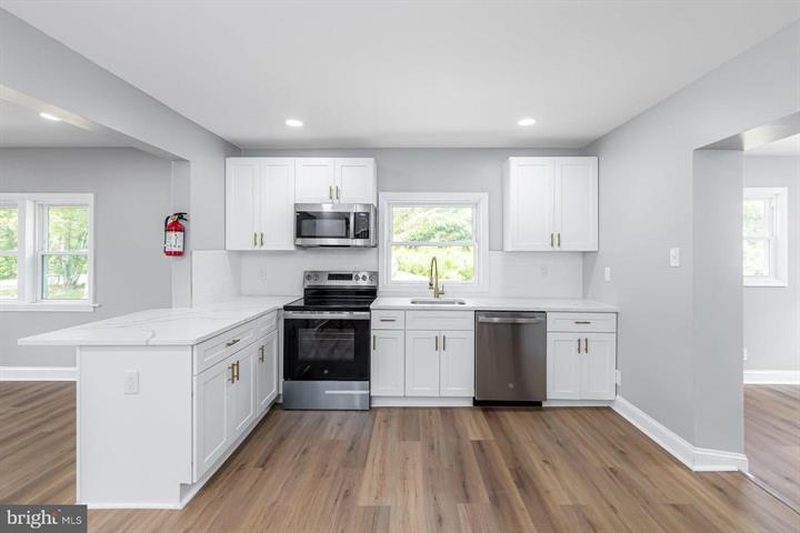
A completed Northbound Home Buyers purchase in Salem County, NJ.
📋 In This Article
- How a missed quarter becomes a lien
- What actually happens at the tax sale
- Why the balance grows faster than you expect
- The two clocks: six months and two years
- The certified letter that starts the countdown
- What changed in July 2024: your right to the surplus
- The deadline, in one sentence
- Redemption: what it takes to stop the clock
- What this looks like across South Jersey
- Estates, vacant houses, and how heirs end up here
- Your realistic options, compared
- What changes if you sell before judgment
Almost nobody loses a South Jersey house to unpaid property taxes in one dramatic moment. It happens the way most slow disasters happen — a quarter gets missed during a bad year, a certified letter arrives at an address the owner moved away from, an estate sits unopened while everyone waits for someone else to deal with it. By the time the paperwork gets serious, years have passed and a stranger holds a lien on the house.
What most owners do not know is that New Jersey changed the ending of that story in July 2024. Until then, a completed tax lien foreclosure took the whole house — every dollar of equity above the tax debt went to the certificate holder. That is no longer how it works. But the protection is not automatic: it depends on a written demand you have to make before a specific point in the case, and if you miss it you forfeit the surplus. This guide walks the whole timeline, from the first missed quarter to that deadline.
How a Missed Quarter Becomes a Lien
New Jersey property taxes are billed quarterly, due February 1, May 1, August 1 and November 1. Miss one and the municipality charges interest under N.J.S.A. 54:4-67 — up to 8% per year on the first $1,500 of the delinquency and up to 18% per year on anything above $1,500, running from the date the payment was due. If your total delinquency is still above $10,000 at the end of the municipal fiscal year, the town may add a 6% year-end penalty on top.
Those rates are the reason a two-quarter problem so rarely stays a two-quarter problem. Eighteen per cent is a hard number to outrun on a household budget, and the balance keeps compounding while you decide what to do about it.
The second thing to understand is that in New Jersey, property taxes are a continuous lien on the real estate itself. They are not a personal debt the way a credit card is. The obligation rides with the property, which is exactly why an unpaid tax bill can eventually cost you the house even when there is no mortgage on it at all.
What Actually Happens at the Tax Sale
Here is the part almost everyone gets wrong. The town does not sell your house at a tax sale. It sells a tax sale certificate — a lien against the property. You still own the house the morning after the sale, and you still own it a year later. What has changed is that a private investor now holds a claim against it and is earning interest on your delinquency.
The New Jersey Department of Community Affairs is blunt about how routine this is: state law requires all 566 municipalities to hold at least one tax sale a year if they have delinquent taxes or municipal charges on the books. Every town in Camden, Gloucester, Salem, Cumberland, Atlantic, Cape May and Burlington County runs one. Your tax collector is not singling you out; they are a statutory officer with no discretion to skip it.
How the bidding works, and why it matters to you
Bidding at a New Jersey tax sale runs backwards. It opens at the statutory ceiling of 18% and bidders compete by bidding the interest rate down. When the rate can go no lower, they start bidding a cash premium instead — money paid to the municipality over and above your delinquency, purely to win the certificate. That premium sits on deposit with the town for up to five years and earns the bidder nothing; if the certificate is neither redeemed nor foreclosed in that window, the premium escheats to the municipality.
Why should a homeowner care about the mechanics of somebody else's auction? Because a heavily bid-down certificate on your property tells you something useful: investors think the house is worth considerably more than the tax debt. That is the same equity the 2024 law now protects, and it is the reason it is worth protecting properly rather than hoping the problem resolves itself.
After the sale, the winning bidder records the certificate with the County Clerk — in our market that is Camden, Gloucester, Salem, Cumberland, Atlantic, Cape May or Burlington County — generally within 90 days. From that point it is a matter of public record attached to your address.
Why the Balance Grows Faster Than You Expect
Two mechanisms make a tax lien balance climb much faster than the original delinquency suggests, and owners are routinely blindsided by both.
Subsequent taxes. Your ordinary quarterly bills keep coming after the certificate is sold. If you cannot pay those either, the certificate holder usually can — and does. Every quarter they pay gets added to the lien and earns interest at the rate the municipality sets. A lien that started at $6,000 in delinquency can carry two more years of taxes and interest by the time anyone files anything.
The redemption penalty. On top of interest, N.J.S.A. 54:5-61 entitles the certificate holder to an additional sum when you redeem, scaled to the size of the certificate: 2% where the amount paid exceeds $200, 4% where it exceeds $5,000, and 6% where it exceeds $10,000. It is a flat charge for the privilege of getting your lien back, and it lands at the worst possible moment — the day you have finally scraped the money together.
Get the actual redemption figure, in writing, from the tax collector
Only your municipal tax collector can calculate what it takes to redeem: the certificate amount, accrued interest at the bid rate, every subsequent tax the holder has paid, and the statutory penalty tier. Do not estimate it from your last tax bill and do not take the number from the certificate holder. Ask the collector's office for a redemption calculation as of a specific date — it is their job to produce one, and every decision you make afterwards depends on it.
The Two Clocks: Six Months and Two Years
How long you have before anyone can file to foreclose depends entirely on who ended up holding the certificate, and the difference is large. Under N.J.S.A. 54:5-86:
- If the municipality itself took the certificate — which happens when nobody bids, and in some smaller Salem and Cumberland County towns that is common — it can start a foreclosure action six months after the sale.
- If a private investor bought the certificate, they must wait two years from the date of sale before instituting an action to foreclose the right of redemption.
Two years sounds like a lot of room. In practice it is the single most misread number in this whole process, for two reasons. First, the clock starts at the tax sale, not at the missed payment — so by the time an owner learns a certificate exists, a chunk of the two years is usually gone. Second, that date is when foreclosure can begin, not when it ends. The case itself then runs on its own schedule.
It is worth being clear that this is an entirely separate proceeding from mortgage foreclosure. A tax lien foreclosure can run against a house with no mortgage at all, and it can run in parallel with a lender's case. If you are dealing with both at once, our New Jersey foreclosure timeline covers the mortgage side, and how to stop foreclosure in NJ walks through the options that apply there.
The Certified Letter That Starts the Countdown
Since the 2024 amendments, a certificate holder cannot simply file. At least 30 days before filing a foreclosure complaint, they must send notice by certified mail to the owner's last known address and to the owner's address as it appears on the last recorded deed. That notice has to tell you something specific: that you have the right to request a judicial sale or an internet auction of the property in order to preserve your equity.
That letter is the most important piece of mail you will receive in this process, and it is also the one most likely to be missed. It goes to the address of record. If the house is vacant, if you moved after a divorce, if the owner on the deed died three years ago and the estate was never opened, the notice can be perfectly valid and still never reach a living human being who understands it.
If you own a South Jersey property with delinquent taxes, check the mailing address the tax collector has on file for you. It costs a phone call and it is the cheapest protection available.
What Changed in July 2024: Your Right to the Surplus
For most of New Jersey's history, a completed tax lien foreclosure was all-or-nothing. Final judgment vested title in the certificate holder, and if the house was worth $240,000 and the lien was $19,000, the difference simply belonged to the lienholder. The owner walked away with nothing.
In 2023 the U.S. Supreme Court held in Tyler v. Hennepin County that a government keeping the surplus value of a foreclosed property beyond the tax debt is an unconstitutional taking under the Fifth Amendment. New Jersey responded with P.L. 2024, c.39 (A3772/S2334), which amended both the Tax Sale Law and the In Rem Tax Foreclosure Act and took effect on July 10, 2024.
The core of it: a certificate holder can no longer keep surplus equity from a tax foreclosure. Instead, the owner or their heirs can require the property to be sold — at a judicial sale or an internet auction conducted by the county sheriff — so that whatever the property fetches above the lien, costs and fees comes back to them.
The two limits worth knowing
It is not automatic. The statute gives you a right to demand that sale, in writing, to the Superior Court. Nobody makes the demand for you, and no judge is obliged to volunteer it. If no demand is made, the case proceeds the old way and the claim to the surplus is forfeited.
Abandoned property is excluded. Property that qualifies as abandoned under P.L. 2003, c.210 does not get the judicial-sale route, and a court can bar a surplus claim on it. Practically, that means letting a vacant inherited house deteriorate is not a neutral choice while you decide what to do — it is a choice that can cost you the protection.
The Deadline, in One Sentence
The demand must be made before final judgment is entered
You may make a written demand for a judicial sale or internet auction at any time prior to the date the court enters final judgment in the foreclosure. Before that date, the equity in your house is protected if you act. After it, the case is over. Every other date in this article — the tax sale, the six months, the two years, the 30-day letter — is a warning. This one is the deadline.
This is also the point at which a New Jersey attorney stops being optional. A demand filed in a Superior Court foreclosure is a legal filing with a hard cut-off, and this article is general information rather than legal advice. If a tax foreclosure complaint has been filed against your property, get a lawyer in front of it now, not after the judgment date.
Redemption: What It Takes to Stop the Clock
The cleanest outcome is redemption, which simply means paying the lien off and ending the whole thing. Your right to redeem survives right up until final judgment is entered, and redeeming at any point before that cancels the certificate and clears the lien from your title.
Redeeming means paying the certificate amount, the interest that has accrued at the bid rate, every subsequent tax the holder has paid with its interest, and the 2%, 4% or 6% statutory penalty described above. It is one number, it comes from the tax collector, and it only grows.
Owners find that money in the usual places: savings, family, a refinance, a home equity product if there is enough equity and enough income to qualify, or a payment arrangement with the municipality where one is available. Every one of those routes is worth exploring before you consider selling. Where they fail, they tend to fail for the same reason — a delinquent tax record and a filed foreclosure make conventional lending hard to obtain quickly, and the timeline does not pause while you apply.
What This Looks Like Across South Jersey
Tax delinquency is not evenly distributed across our market, and the shape of it differs by county.
Cumberland, Salem and Atlantic counties
These are the corners of the state where the effective tax rate on a modest house is highest relative to its value, and where a single year of trouble does the most damage. We buy regularly in Millville, Bridgeton, Salem, Pennsville and Atlantic City, and tax arrears are behind a meaningful share of those calls. Our Quinton pre-foreclosure project in Salem County is one example of a house we closed on while a clock was running. Our Cumberland County selling guide goes deeper on that market.
Camden, Gloucester and Burlington counties
Closer in, the pattern is different: higher values, higher absolute tax bills, and delinquency that usually traces to a life event rather than a structural affordability problem — a death, a divorce, a job loss, a landlord who stopped keeping up with a property that stopped paying for itself. The lien mechanics are identical; the equity at stake is often much larger, which is precisely why the surplus rules matter here.
Delaware is a different system entirely
Everything above is New Jersey law. If your property is across the bridge in New Castle, Kent or Sussex County, none of these statutes apply to it — Delaware runs its own monition and sheriff's sale process on a different timetable. Our guide to Delaware seller closing costs covers what is different on that side of the river.
Estates, Vacant Houses, and How Heirs End Up Here
The single most common version of this problem we see is not a homeowner who stopped paying. It is a house that nobody is quite responsible for.
A parent dies. The taxes were on autopay from an account that gets closed, or they were paid by cheque by someone who is no longer here to write one. The house sits. Probate stalls because three siblings live in three states and none of them wants to be the one to start it. Notices go to the deceased owner at the property address, where nobody collects the post. Two years later the family discovers a certificate holder has filed.
If you are an heir in that position, two things are worth knowing. First, the 2024 law names heirs explicitly — the right to demand a sale and claim the surplus is not limited to the person whose name is on the deed. Second, the abandoned-property exclusion is a real risk for an empty house that has been left to deteriorate, so time genuinely works against you. Our guide to selling an inherited house in New Jersey covers the probate side of getting a sale done.
Your Realistic Options, Compared
| Option | Best when | The trade-off |
|---|---|---|
| Redeem the certificate | You can raise the payoff and want to keep the house | Interest plus a 2–6% penalty; the figure only grows |
| Payment plan with the municipality | The delinquency is recent and the town offers one | Availability varies by municipality; it does not undo a sold certificate |
| List it retail, pay the lien at closing | The house shows well and you have months, not weeks | Commission, repairs and time on market while interest accrues |
| Demand a judicial sale or internet auction | Foreclosure has been filed and you cannot redeem | Must be demanded before final judgment; a sheriff's sale price is not a retail price |
| Sell as-is to a cash buyer | There is a deadline, the house needs work, or it is an estate | Offer is below full retail value in exchange for speed and certainty |
There is no universally correct row. If you can redeem, redeem. If you have equity, time and a house in decent shape, list it. The rows further down exist for the situations where the first two are not available, and the worst outcome by a wide margin is choosing none of them and letting the judgment date pass.
What Changes If You Sell Before Judgment
Let us be straight about what a cash sale does and does not do here.
What it does not do: make the lien disappear. The tax debt is attached to the property and it gets paid at closing, out of the proceeds, before anything reaches you. Any buyer who suggests otherwise is not describing a real closing.
What it does do: convert the whole problem into a single settlement statement, on a date you choose, before the deadline that costs you everything. Our title company pulls every certificate, delinquent balance and accrued-interest figure, obtains current payoffs from the municipality and each certificate holder, and satisfies them from the proceeds. You do not need to redeem first, you do not need to chase payoff letters, and you do not need to repair anything — we buy as-is, including the vacant, deferred-maintenance estate houses this situation tends to produce. Whatever is left after the liens and any mortgage are paid is wired to you. Our tax lien sale page sets out that process step by step, and how it works covers the general timeline.
The honest trade-off is the one it always is: a cash offer is below full retail market value, and it comes with no commission, no repairs, no showings and no out-of-pocket closing costs — we cover title, recording and the transfer costs on our side. Our comparison page puts the two paths side by side and NJ seller closing costs explains what comes out of a conventional sale, so you can judge the gap yourself rather than take our word for it.
This article is general information, not legal, tax or financial advice — redemption figures and foreclosure deadlines are property-specific, so confirm yours with your municipal tax collector and a New Jersey attorney. If you own a South Jersey property with delinquent taxes or a tax sale certificate against it and you want a straight answer about what it would sell for as it stands, call Northbound Home Buyers at (856) 226-4289. We buy across South Jersey and into all three Delaware counties — the full list is on our locations page, and more questions are answered in our FAQ.