
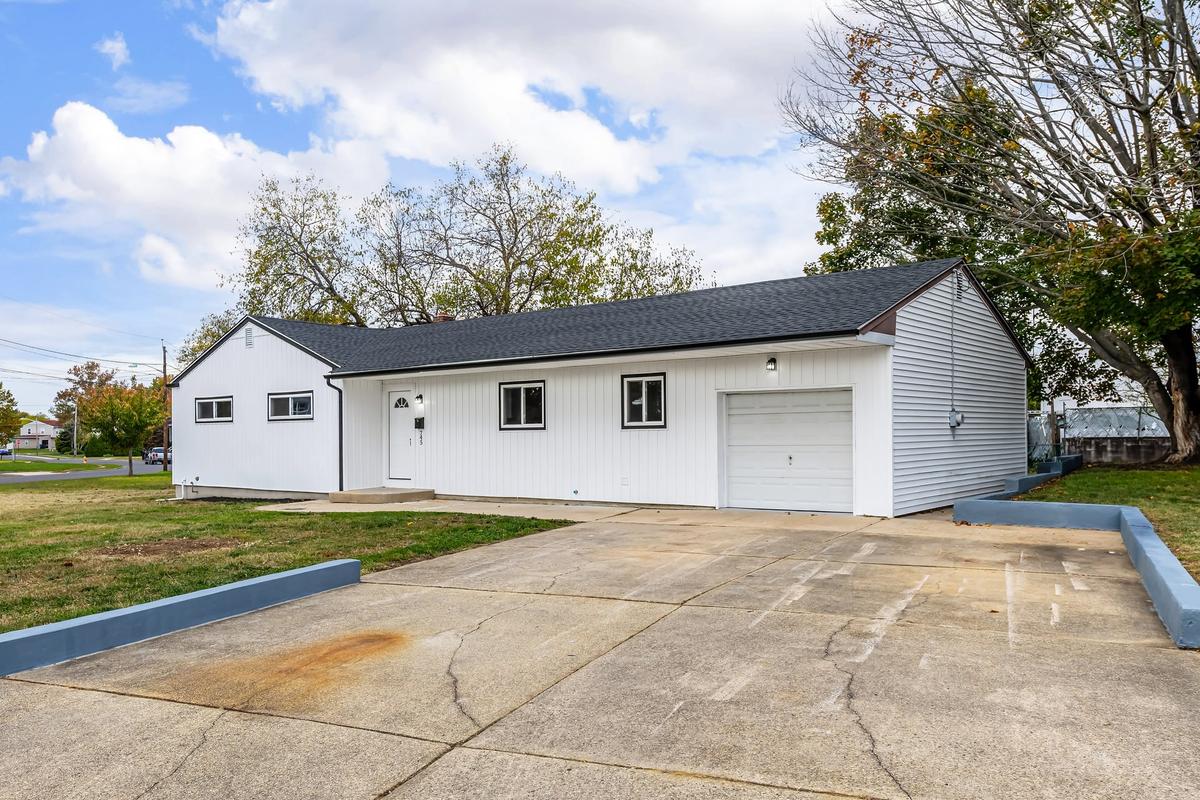
A completed Northbound Home Buyers purchase in Westampton, Burlington County, NJ.
📋 In This Article
Most people who fall behind on condo or HOA fees do not set out to stop paying. A job ends, a medical bill lands, the mortgage gets paid first because the mortgage feels like the one that matters — and the monthly association bill slides. Then a letter arrives from the association's attorney with a balance far bigger than the dues you missed, because interest, late fees and legal fees have been stacked on top.
In South Jersey this is not a niche problem. A lot of owners live in townhouse and condominium communities — around Cherry Hill, Mount Laurel, Marlton and Voorhees especially — and every one of those communities runs on monthly assessments. This guide explains, in plain terms, what New Jersey law lets an association do when you fall behind, why the unpaid balance follows the house when you sell, and what your realistic options are.
How Falling Behind Turns Into a Lien
Two New Jersey statutes do the work here, and they read almost word for word the same. N.J.S.A. 46:8B-21, part of the Condominium Act, covers condo associations. N.J.S.A. 45:22A-44.1, added in 2019 (P.L. 2019, c.68), gives homeowners associations in planned communities the same powers. Co-ops are expressly left out of the HOA version.
Under both, the association has a lien on your unit for unpaid assessments once it gives you proper notice. To make that lien effective against everyone else, the association records a claim of lien in the public records of the county where the house sits — the same county clerk's office that records deeds and mortgages in Camden, Burlington or Gloucester County. The claim has to describe the unit, name the record owner, and state the amount due and when it was due, and it can only include sums that are already due when it is recorded.
From the moment it is recorded, the lien shows up on any title search. That is the point at which a missed-dues problem becomes a problem with selling or refinancing the house.
What the Lien Can Include
This is the part that surprises people. The lien is not limited to the dues you missed. The statutes let it cover:
- The unpaid assessments themselves, including any other money “duly owed” to the association;
- Interest on the unpaid amount;
- Late fees and fines;
- Expenses and reasonable attorney's fees the association incurs collecting the debt.
There is one limit worth knowing: an association may not record a lien where the only thing unpaid is late fees. If you have caught up on the dues and the remaining balance is purely late charges, that cannot be the basis of a recorded lien.
The practical lesson is that the balance grows fastest once lawyers are involved. Two or three months of dues is usually something you can work out directly with the management company. A year of dues, after the file has gone to the association's collection attorney, can carry legal fees that rival the dues themselves.
The Six-Month Priority Rule
Normally, liens are paid in the order they were recorded, and an association lien recorded after your mortgage would sit behind it. New Jersey makes an exception. A recorded association lien gets a limited priority over earlier mortgages — often called a “super-priority” — for up to six months of regular assessments:
| The rule | What it means for you |
|---|---|
| Priority covers only “customary” assessments for the six months before the lien was recorded | Regular monthly or quarterly dues under the budget — not reserves, late charges, interest or collection costs |
| The six-month priority renews annually | A balance left unpaid for years can earn a new six months of priority each year |
| The lien must be recorded before the mortgage lender's foreclosure complaint is received or its lis pendens is filed | The association has a reason to move quickly once you fall behind |
| Priority otherwise expires on the first day of the 60th month after the lien is recorded | The extra priority is not open-ended |
| The association must notify your first mortgage holder in writing when it records a priority lien | Your lender will usually find out you are behind on dues |
Municipal liens and federal tax liens are excluded — the association's priority never jumps ahead of those. Unpaid property taxes still come first, which is why a tax problem and a dues problem together are so dangerous. Our guide to NJ tax lien foreclosure covers the tax side.
Why should a homeowner care about who gets paid first? Because a lender whose mortgage has been jumped by six months of dues does not like it, and because the association's priority means it will be paid out of a sale or foreclosure ahead of other creditors. Either way, the money comes out of your equity.
Can the Association Foreclose?
Yes. Both statutes say an association lien may be foreclosed by a suit brought in the association's name in the same manner as a mortgage foreclosure. Unless the master deed or bylaws prohibit it, the association can bid on the unit at the foreclosure sale and then own, lease or sell it.
The association can also sue you for a money judgment for the unpaid assessments without giving up its lien. In other words, it does not have to choose between going after the house and going after you.
In practice, most associations start with collection letters and a payment-plan offer, and foreclosure on a dues lien is a last resort. But it is a real power, and New Jersey foreclosures move through the Superior Court on the same general track whether a bank or an association is the plaintiff. Our New Jersey foreclosure timeline walks through that process stage by stage, and how to stop foreclosure in South Jersey covers the exits. If you would rather sell the unit before an association or a lender gets that far, our selling a house in foreclosure page explains how a cash sale pays off what is owed at closing.
If the bank forecloses instead
When your mortgage lender forecloses and a buyer or the lender takes title through that foreclosure, New Jersey law says the new owner is not liable for the dues that came due before it took title. That rule protects the next owner, not you — and any equity you had is the first thing a foreclosure consumes. Selling before it gets that far is almost always better for you.
Selling a House With Unpaid Dues
You can sell a condo or HOA home with unpaid dues and a recorded lien. What you cannot do is leave them behind. On any voluntary sale, New Jersey makes the seller and the buyer jointly and severally liable for all unpaid assessments up to the date of the transfer. The buyer can recover from the seller anything it ends up paying, but no buyer's title company will let that risk through. In real life, that means the full balance — dues, interest, fees and the association attorney's charges — is paid off at closing out of your proceeds, the same way your mortgage is.
Get the certificate early
The statutes give you a tool for this. Any unit owner, or a buyer before closing, can require the association to provide a certificate showing the amount of unpaid assessments, and the association must provide it within 10 days of the request. A buyer who relies on that certificate is only liable for the amount it shows. Ask for it as soon as you are thinking about selling, so the number on your closing statement is not a surprise.
Work out your real net
Once you have the association's number, you can do the honest math: sale price, minus your mortgage payoff, minus the association balance, minus New Jersey's seller costs — the Realty Transfer Fee and, on a listed sale, commissions and repairs. Our breakdown of NJ seller closing costs shows what those usually look like. If the total owed is more than the house will bring, you are in short-sale territory, and the association becomes one more creditor that has to agree to take less.
Your Options, Cheapest First
- Call the management company before the lawyers do. Early on, many associations will set up a payment plan for the arrears. The balance is smallest now and grows every month it goes to collection.
- If it is already with the attorney, ask for the full itemized payoff — dues, interest, late fees, legal fees, separately. Check that the dues match your budget and that nothing has been counted twice.
- Prioritize honestly. If you are also behind on the mortgage or property taxes, get advice before you choose which to pay. Free help is available through Legal Services of New Jersey's hotline and the state's foreclosure mediation program.
- If keeping the house no longer makes sense, sell before a foreclosure eats the equity. A listed sale works if you have time and the house shows well. If you need certainty or speed, or the house needs work, a direct sale lets you pay the association off at closing on a date you choose.
That last option is where we come in. When we buy a South Jersey condo or HOA home, our title company orders the association's payoff along with everything else, and the arrears come off the top of the proceeds at closing — no repairs, no showings, and no commission on your side. Our offer is below full retail value, and our comparison page lays out that trade-off plainly. We buy throughout the townhouse-heavy towns of Burlington and Camden counties, including Mount Laurel, Marlton, Voorhees and Cherry Hill. You can see a typical Burlington County purchase in our Westampton project, and how it works covers our timeline.
A Note for Delaware Owners
Everything above is New Jersey law. Delaware has its own statutes for condominiums and common-interest communities, and the priority and foreclosure rules there are different. If your home is in New Castle, Kent or Sussex County, do not rely on the New Jersey rules here — ask a Delaware attorney, and see our guide to Delaware seller closing costs for what a sale there involves.
The Bottom Line
An unpaid HOA or condo balance in New Jersey does not go away and does not stay small. It becomes a recorded lien, it gathers interest and legal fees, up to six months of it can jump ahead of your mortgage, and it has to be paid in full when you sell. The good news is that it is a known number: request the association's certificate, add it to your mortgage payoff, and you know exactly where you stand.
If the answer is that keeping the house no longer works, call Northbound Home Buyers at (856) 226-4289. We will tell you what the house would sell for as it stands and what you would walk away with after the association is paid. More answers are in our FAQ, and you can see everywhere we buy on our locations page.
This article is general information, not legal advice. Your association's master deed, bylaws and collection policy matter, so for your specific situation talk to a New Jersey attorney.