
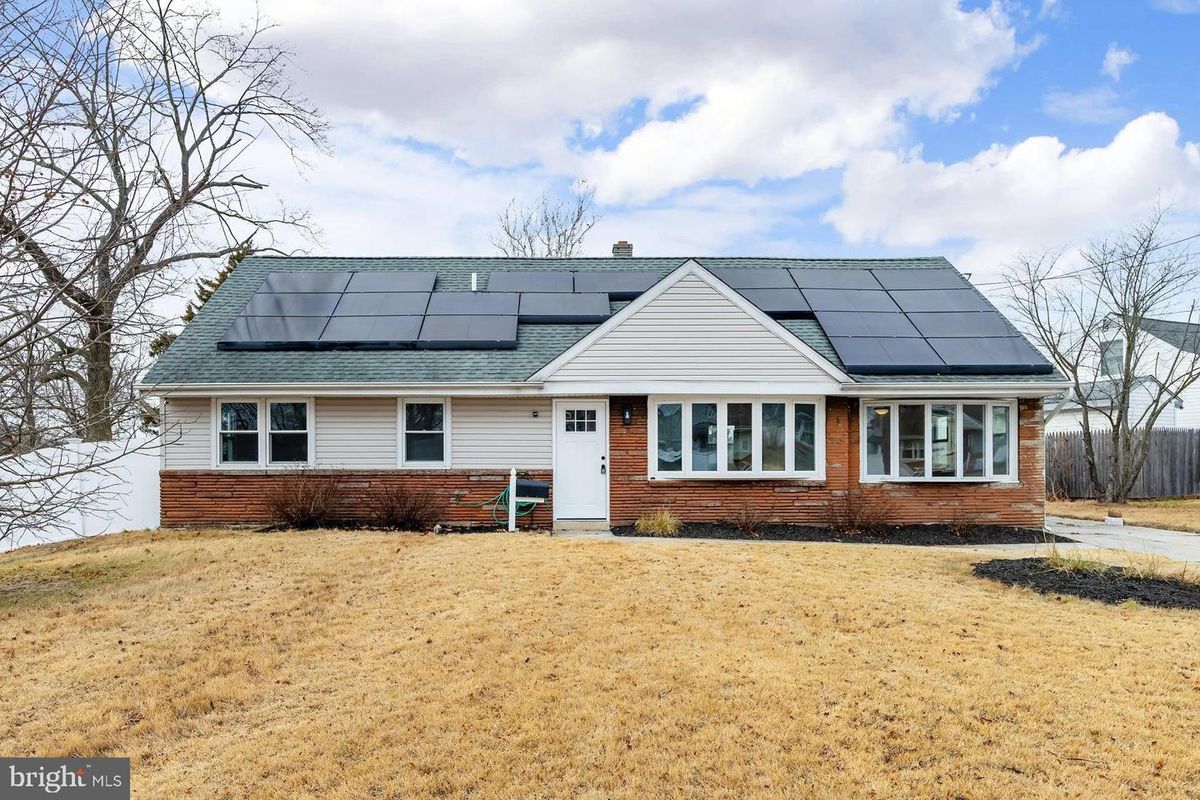
A completed Northbound Home Buyers purchase in Wenonah, Gloucester County, NJ.
📋 In This Article
- How Foreclosure Works in Delaware
- Before Anything Is Filed: 120 Days and a 45-Day Notice
- The Complaint and Your 20-Day Clock
- Automatic Mediation: What It Is and How to Use It
- The Options on the Table at Mediation
- Judgment, the Sheriff's Sale and Confirmation
- After the Sale: Surplus Money and Moving Out
- Selling Before the Sheriff's Sale
- Where to Get Free Help in Delaware
- The Bottom Line
A Delaware foreclosure starts slowly and finishes fast. The first months are mostly letters: missed-payment notices, then a state-required notice with a heading in 30-point type telling you to take action to save your home. Many homeowners put those in a drawer. Then a sheriff's deputy serves a complaint, a mediation date arrives in the mail, and after that the calendar belongs to the court.
The good news is that Delaware gives homeowners more protection than most states. Every owner-occupied foreclosure goes through a court-supervised mediation program before the lender can get a judgment, and the law lists out the ways a case can end without a sheriff's sale. This guide walks through the process step by step, what each deadline means for you, and where selling the house fits in. It covers all three counties: New Castle, Kent and Sussex. If you are in South Jersey instead, the rules are different; see our New Jersey foreclosure timeline.
How Foreclosure Works in Delaware
Delaware is a judicial foreclosure state. A lender cannot sell your house by mailing a notice; it has to go to court. The action has an old name: a writ of scire facias sur mortgage, filed in the Superior Court of the county where the house sits under 10 Del. C. § 5061. In plain English, the court orders you to appear and show why the house should not be taken and sold to pay the mortgage.
That court is the Superior Court in Wilmington for New Castle County, in Dover for Kent County, and in Georgetown for Sussex County. The sheriff of that county serves the papers and, if the case gets that far, runs the sale.
The special protections below (the 45-day notice, the loss-mitigation affidavit and automatic mediation) apply to owner-occupied, one- to four-family primary residences. If the house is a rental or a vacant property you do not live in, most of them do not apply, and the case can move considerably faster.
Before Anything Is Filed: 120 Days and a 45-Day Notice
Two rules hold a lender back at the start.
The federal 120-day rule. Under the federal mortgage servicing rules, most servicers cannot make the first filing for foreclosure until a borrower is more than 120 days behind. That four-month stretch is the cheapest time to act, because nothing has been filed yet and there are no foreclosure legal fees piling onto what you owe.
Delaware's Notice of Intent to Foreclose. On an owner-occupied home, Delaware law (10 Del. C. § 5062B) says the lender cannot file until 45 days after it sends a Notice of Intent to Foreclose. It has to go by both certified and first-class mail, and the law prescribes what it must contain:
- A heading, in English and Spanish, reading “NOTICE REQUIRED BY DELAWARE LAW: TAKE ACTION TO SAVE YOUR HOME FROM FORECLOSURE.”
- The exact amount needed to cure the default and reinstate the loan, including past-due payments, penalties and fees, plus a phone number to call for reinstatement instructions.
- An accounting of your payments for the 12 months before the default and how the lender applied them.
- Any loss-mitigation programs you may qualify for, with instructions on how to apply.
- A list of HUD-certified housing counselors and the Attorney General's foreclosure hotline number.
Keep that notice, and read the reinstatement figure
The Notice of Intent is the most useful document you will get in the whole process. It tells you what it costs to stop the foreclosure outright, and the 12-month accounting lets you check the lender's math. If you are thinking about selling, it also gives a buyer a starting point for what the payoff will look like.
The Complaint and Your 20-Day Clock
Once the 45 days are up, the lender files its complaint in Superior Court and the sheriff serves it. Under Superior Court Civil Rule 12(a), a defendant generally has 20 days after service to answer. That is a short window, and it does not pause for mediation. The statute tells the mediator to warn you directly that mediation does not suspend your obligation to respond to the foreclosure complaint.
The complaint arrives with a separate Notice of Foreclosure Mediation and a Certificate of Participation form. Those papers are your way into the mediation program, and they come with their own deadline.
Before any judgment can be entered on an owner-occupied home, the lender also has to file a sworn loss-mitigation affidavit (10 Del. C. § 5062A). In it, the lender states that you were given the chance to apply for the relief programs you might qualify for and explains why the loan is not being modified. If that affidavit turns out to be false, the law requires the court to dismiss the case, and the lender cannot charge you the fees for the dismissed action.
Automatic Mediation: What It Is and How to Use It
Delaware's Automatic Residential Mortgage Foreclosure Mediation Program (10 Del. C. § 5062C) is the biggest difference between Delaware and many other states. For an owner-occupied home, the mediation conference is scheduled automatically. You do not have to ask for it. The key dates:
| Step | Deadline |
|---|---|
| Meet a HUD-approved housing counselor and file the Certificate of Participation | Within 30 days of being served the mediation notice |
| Mediation conference | Scheduled 45 to 75 days after the notice was served |
| Your financial proposal worksheet to the lender and mediator | At least 14 days before the conference |
| Lender's checklist of documents you need to bring | At least 7 days before the conference |
| Earliest date the lender can seek judgment | The day after the scheduled conference |
The Certificate of Participation asks three yes-or-no questions: whether you are the borrower, whether you live in the house as your primary residence, and whether you want to keep living there or otherwise negotiate a resolution that will not result in a sheriff's sale. That last phrase matters. You do not have to want to keep the house to use mediation. A homeowner who wants to sell and walk away with their equity can still check yes and use the conference to negotiate time. Answer no to any of the three and the conference is cancelled.
You must attend in person. The lender, or its attorney with someone on the phone who can approve a deal, must attend too. You can bring your housing counselor and a lawyer. If the lender fails to show up for two conferences in a row, the mediator can recommend that the court dismiss the case. The mediator cannot force either side to accept anything, though, so if you do not reach an agreement the foreclosure goes on.
Skipping the Certificate does not cancel mediation. The lender still has to show up. But the statute lets the mediator take your failure to file it into account, and without a counselor's proposal you arrive with nothing to negotiate with.
The Options on the Table at Mediation
The mediation statute lists the outcomes the parties are supposed to discuss. It is a useful checklist whether or not your case is in mediation yet:
- Bringing the loan current, meaning paying the full reinstatement amount.
- A repayment plan to catch up over time, including paying the default over as long as 60 months.
- A loan modification.
- Paying off the mortgage. For most people that means selling the house.
- Agreeing to move out in the near future in exchange for not contesting the case and a payment, often called cash for keys.
- A deed in lieu of foreclosure, where you sign the house over to the lender.
- Filing bankruptcy.
Paying off the mortgage through a sale is the only option on that list that turns your equity into cash in your hand. A deed in lieu or cash for keys ends the case, but any equity above the loan goes with the house. If you owe noticeably less than the house is worth, selling is almost always worth pricing out before you agree to either. Our guide to stopping foreclosure compares these routes in more detail. It was written for New Jersey, but the trade-offs are the same.
Judgment, the Sheriff's Sale and Confirmation
If mediation does not resolve the case and you have no defense, the court enters judgment and the lender gets a writ called levari facias, which directs the county sheriff to sell the house at public auction (10 Del. C. §§ 5063–5065).
New Castle County publishes the most detail about how its sales run. According to the New Castle County Sheriff's Office auction rules:
- Sheriff's sales of real estate are held on the second Tuesday of each month.
- At a mortgage sale the winning bidder must pay 20% or $10,000, whichever is greater, on the spot, with the balance due by the third Monday of the following month.
- Properties are sold as-is, sight unseen, with no walk-through or appraisal.
- The sale is not final on auction day. It becomes final when the Superior Court confirms it, which happens on the first Friday after the third Monday of the month after the sale. The buyer gets full legal title on confirmation.
Kent and Sussex County sheriffs run their own sales on their own schedules. Check with the sheriff's office in Dover or Georgetown for dates.
There is no redemption period after confirmation
Some states give a homeowner months after a foreclosure sale to buy the house back. Delaware does not. Under 10 Del. C. § 5066, the buyer at a confirmed sheriff's sale holds the house “discharged from all equity of redemption.” Once the sale is confirmed, you cannot undo it by paying the debt. Your real deadline is the sheriff's sale itself, not some date after it.
After the Sale: Surplus Money and Moving Out
Surplus money is yours. If the house sells at auction for more than the mortgage debt, interest and costs, 10 Del. C. § 5067 says the surplus “shall be rendered to the owner of the premises at the time of sale.” But sheriff's sales are cash auctions of houses nobody could walk through, so bids often come in well below market value. Whatever equity is left after the auction is usually far less than a normal sale would have brought, and you may have to claim it.
You are not evicted automatically. New Castle County's post-foreclosure notice says the buyer at a sheriff's sale has to go back to the Superior Court for a writ of possession to remove former owners or tenants who stay. A former owner may be entitled to a hearing first. The buyer may also negotiate with you to leave voluntarily by a set date, and before confirmation the buyer cannot remove or destroy your belongings. If there are tenants in the house, federal law gives them their own protections.
Selling Before the Sheriff's Sale
You can sell your house at any point until the sheriff's sale. You do not need the lender's permission as long as the sale price covers what you owe. At closing, the settlement attorney gets a payoff from the lender, which includes the missed payments, interest and foreclosure fees so far. That payoff is paid from the sale proceeds, the lender dismisses the case, and the remaining equity goes to you. Delaware requires a Delaware attorney to handle the settlement, and the seller usually pays half of the realty transfer tax. Our Delaware seller closing costs guide shows what comes off the top.
The earlier you sell, the more of the equity you keep, because foreclosure legal fees and interest are added to the payoff every month the case runs. Your realistic options depend on how much time is left:
| Where you are | Realistic ways to sell |
|---|---|
| Behind, nothing filed yet | A traditional listing is still possible if the house shows well and you can carry it through a normal sale |
| Complaint filed, mediation ahead | A listing or a cash sale. Mediation can be used to agree on a sale timeline with the lender |
| Judgment entered, sale date set | Usually only a buyer who can close in days to weeks, before the auction |
| You owe more than the house is worth | A short sale, which needs the lender's approval, or one of the mediation options above |
A cash buyer's offer will be below what a fully repaired house would list for. The trade-off is certainty and speed: no repairs, no showings, no buyer financing that can fall through a week before the auction, and a closing date you choose. We explain that trade-off in plain numbers on our comparison page, and our how it works page shows our process from first call to closing. If you are wary of anyone calling themselves a cash buyer, that is healthy. Delaware's own Notice of Intent warns homeowners about people promising to save their home, so read our guide on how to tell a legitimate cash buyer from a scam before you sign anything with anyone.
We buy in all three counties, including Wilmington, Newark and Middletown in New Castle County, Dover in Kent County, and Milford. Our Quinton pre-foreclosure project, across the river in Salem County, shows what a sale ahead of a sheriff's auction looked like for one family.
Where to Get Free Help in Delaware
- The Delaware Attorney General's foreclosure hotline, (800) 220-5424. The Department of Justice runs the mediation program's information line and can point you to a housing counselor. The same office's Consumer Protection Unit takes complaints about foreclosure rescue scams.
- A HUD-approved housing counselor. Counseling is free, and meeting one is required before you file the Certificate of Participation. The Delaware State Housing Authority keeps the list.
- DSHA's emergency mortgage program. When we checked in September 2026, the Delaware State Housing Authority's foreclosure-prevention page said it was not currently accepting applications for the Delaware Emergency Mortgage Assistance Program (DEMAP). Check the page again for updates, but do not build your plan around it.
- A Delaware attorney. If you have a defense, such as a payment the lender misapplied or a notice that was never sent, a lawyer is the person to raise it, and the 20-day answer deadline is why you should call one early.
The Bottom Line
The Delaware process gives you three good chances to change the outcome. The first is the 120 days before anything is filed. The second is the 45-day Notice of Intent, which tells you the reinstatement figure. The third is mediation, where the lender has to sit across from you and discuss every option, including a sale. After judgment, your time is measured in weeks. After a confirmed sheriff's sale, there is no way back.
If keeping the house is realistic, work the mediation process with a housing counselor. If it is not, the best financial result usually comes from selling while there is still equity to protect and time to close. Either way, do not wait for the sale date. More answers are on our FAQ page.
This article is general information, not legal advice. Procedures and schedules differ by county and change over time, so confirm dates with the Superior Court, the county sheriff or a Delaware attorney. If you want a straight answer on what your Delaware house would sell for as it stands, call Northbound Home Buyers at (856) 226-4289. We buy across all three Delaware counties and South Jersey; see our locations page.